Projects
The Drizzle Project
Navigating Seattle Rain Without Gear
My Role
UX Researcher
Product Designer
Team
UX Researcher (4)
Timeline
Sep 2025 - Dec 2025

Design Problem

How might we design safer, more accessible, and more equitable rain protection solutions for UW students on campus?
Design Solution

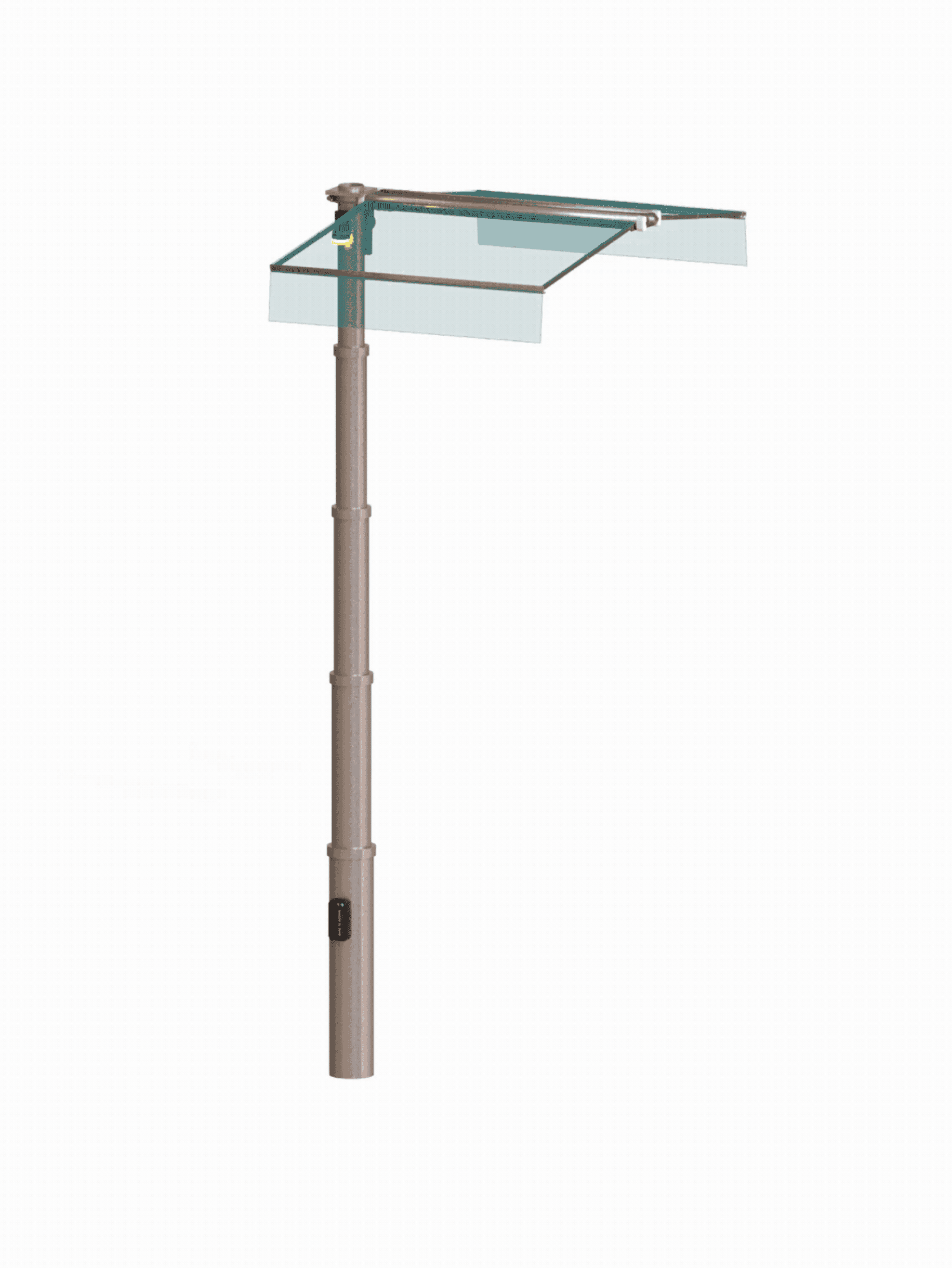
The Drizzle Project tackles this issue with modular, institution-maintained overhangs that keep commuting students dry without costly or cumbersome rain gear. These shelters also support students with mobility challenges by offering accessible, covered places to rest without managing extra equipment.

Discovery and Define
Secondary Research
01
Understanding Seattle’s Rain Culture
Identified cultural norms, social stigmas, and precedents established by those who have lived and experienced Seattle’s rainy season. This established a contextual understanding of our problem space.
02
Identifying Common Pain Points
Researched challenges Seattleites faced when commuting across Seattle in the rain. Analyzed the influence of existing infrastructure on the safety and comfortability of those who commute often.
Social stigmas against umbrellas
Purchasing expensive rain gear is the norm
Lack of proper infrastructure and covered walkways
Limited lighting available for pedestrians
User Surveys + Interviews
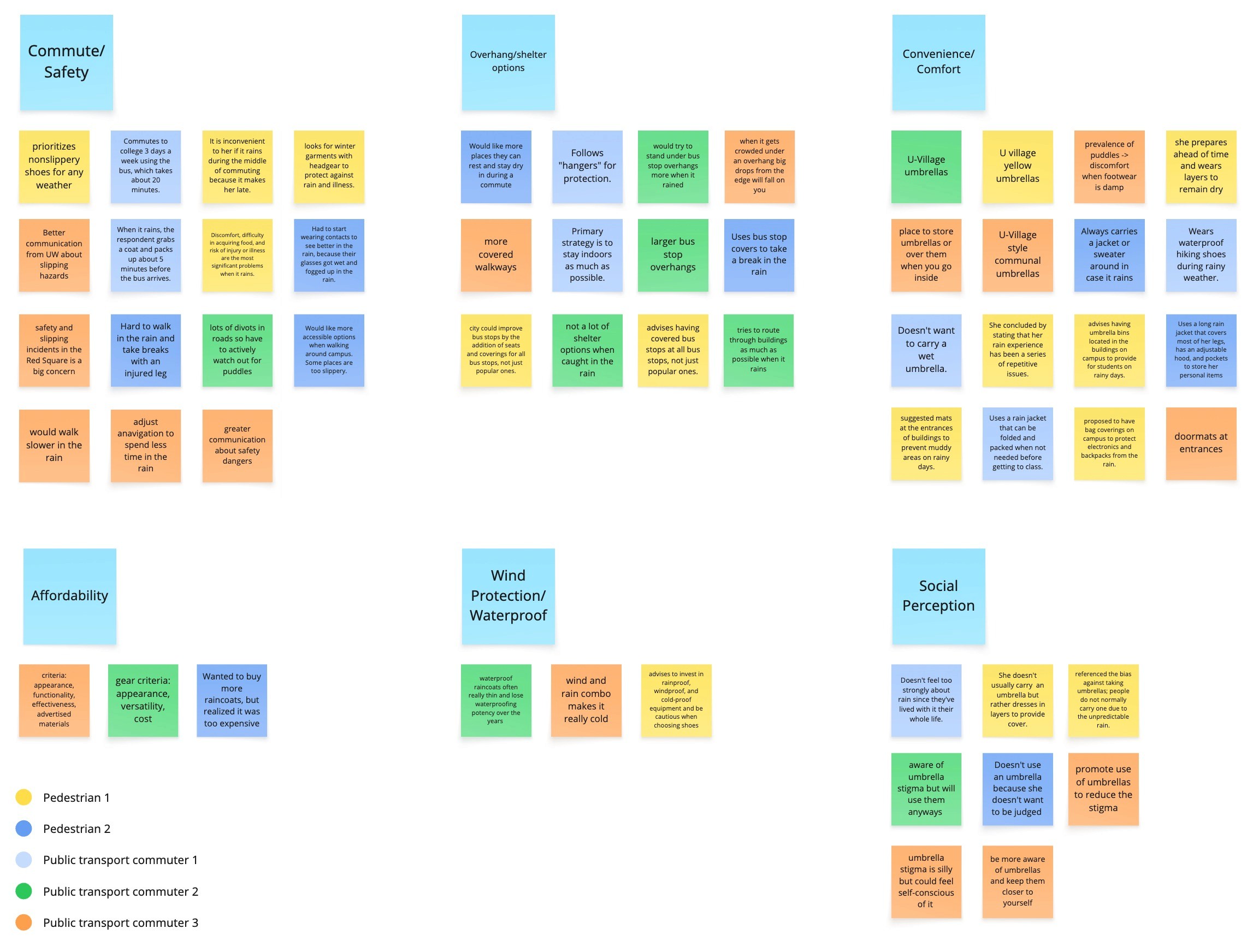
A user survey was circulated across the UW community to obtain quantitative data on 21 UW students who have experienced the rainy season in Seattle. The survey overviewed the students’ commute schedule, the rain gear they bought and used, and common pain points when navigating through rainy days.
Building on the insights from the user surveys, we also conducted 5 semi-structured user interviews with UW students who regularly use public transport and commute to campus. The interviews allowed for deeper storytelling and highlighted key infrastructural issues in accessibility, mobility, and safety.
Rain Gear is Expensive
1/3 of the respondents spent less than $25 on rain gear, indicating the financial barriers to purchase higher quality rain gear.
Lack of Compatible Infrastructure
Over 70% of the students indicated UW’s lack of covered walkways and bus shelters on campus
Safety Concerns in the Rain
Many students shared how specific areas on campus were slippery or poorly lit, raising accessibility and safety concerns.

User Personas
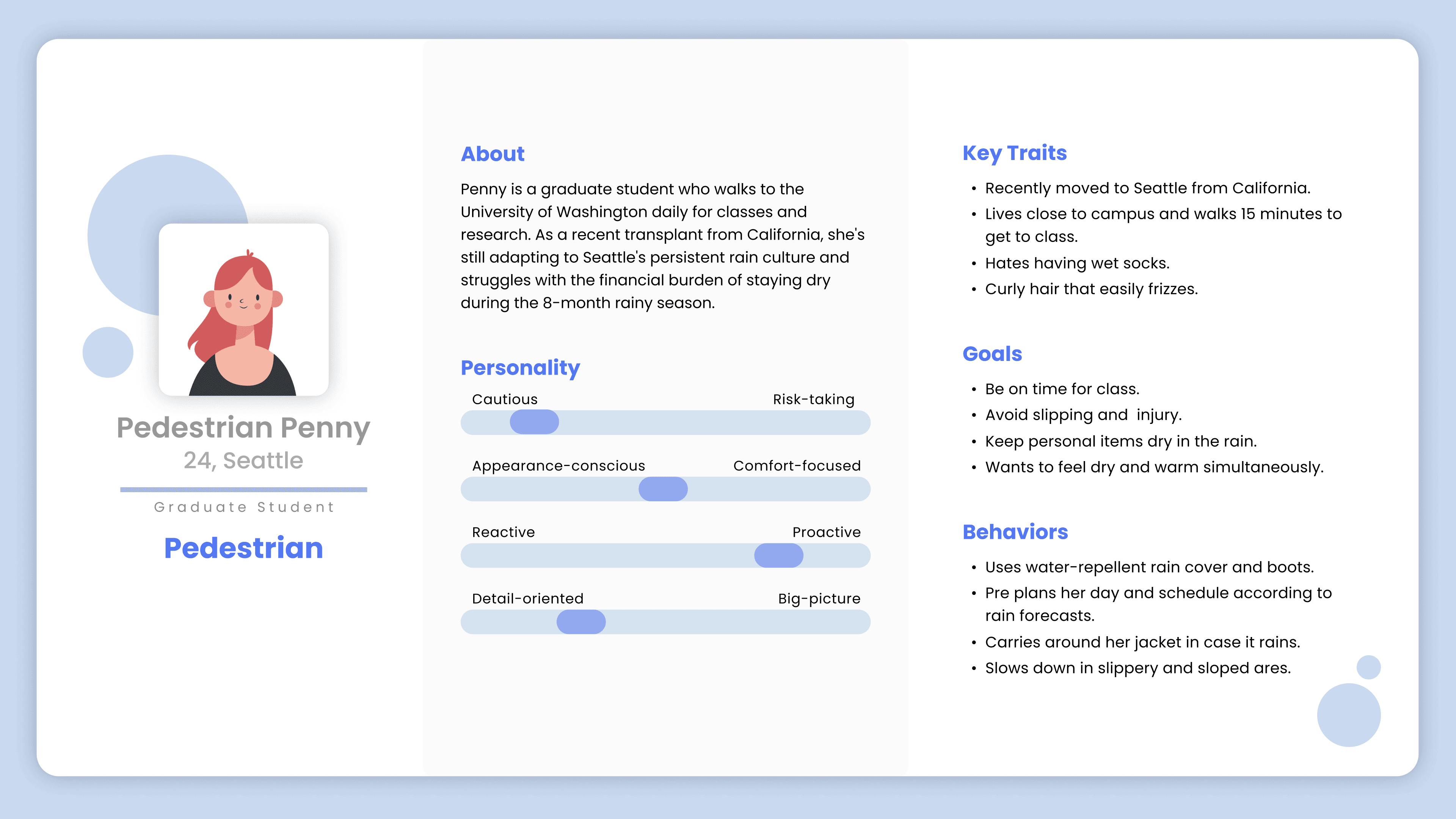
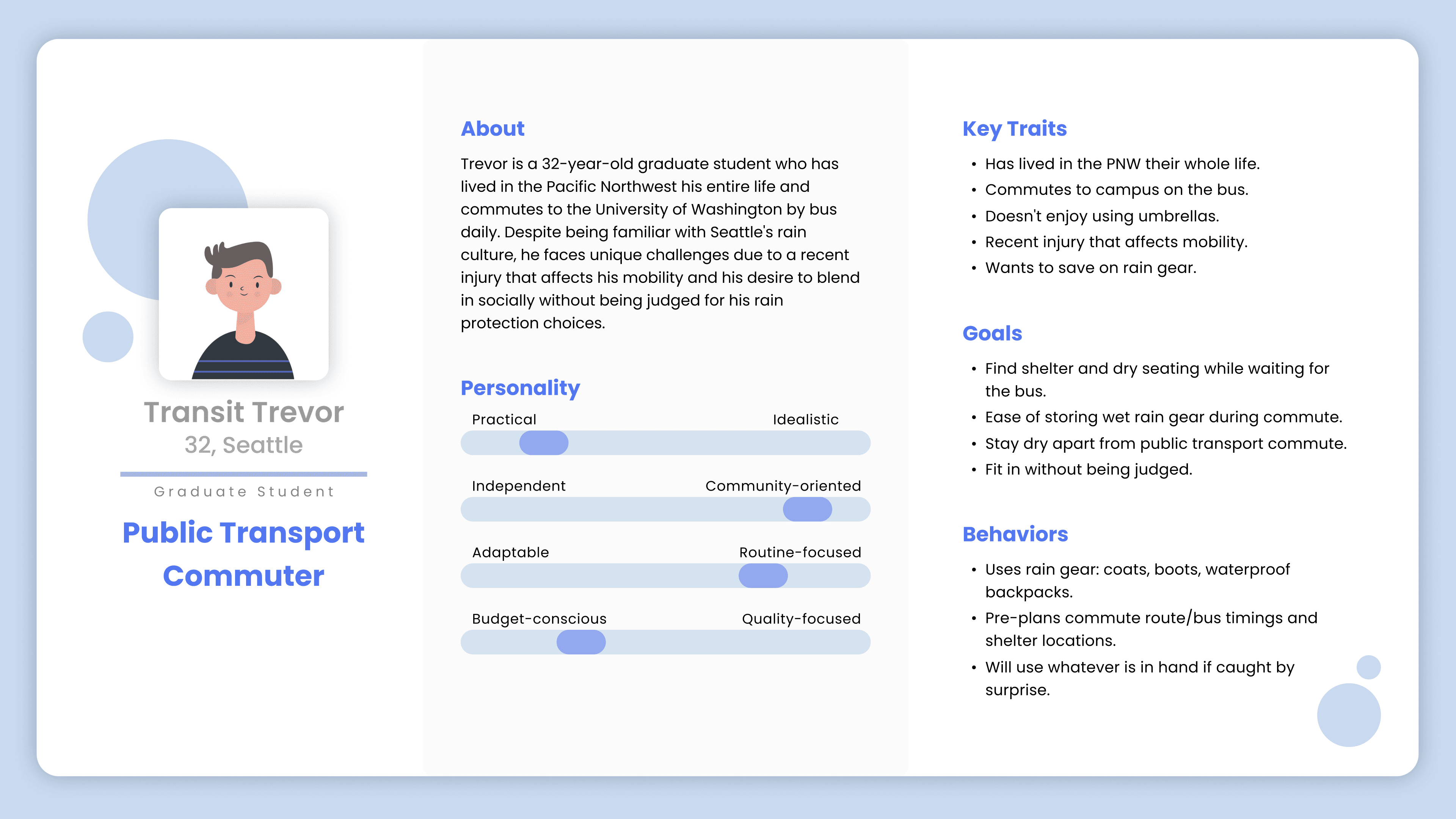
Two user personas were developed to represent UW students that walk around campus and those who commute via public transportation. These personas highlighted key pain points, such as financial constraints and accessibility barriers, which informed and guided our design priorities.


Ideate
Sketching
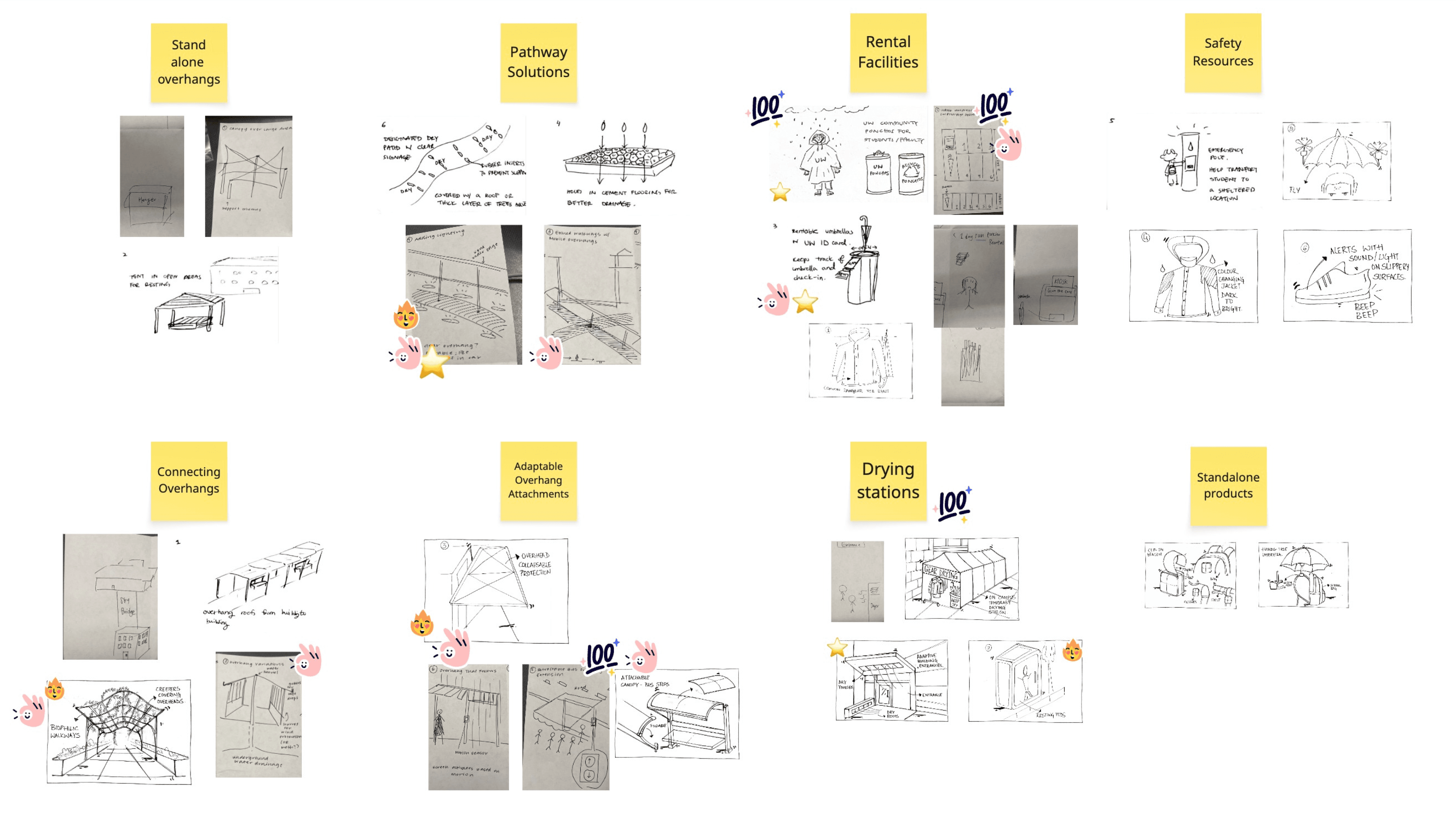
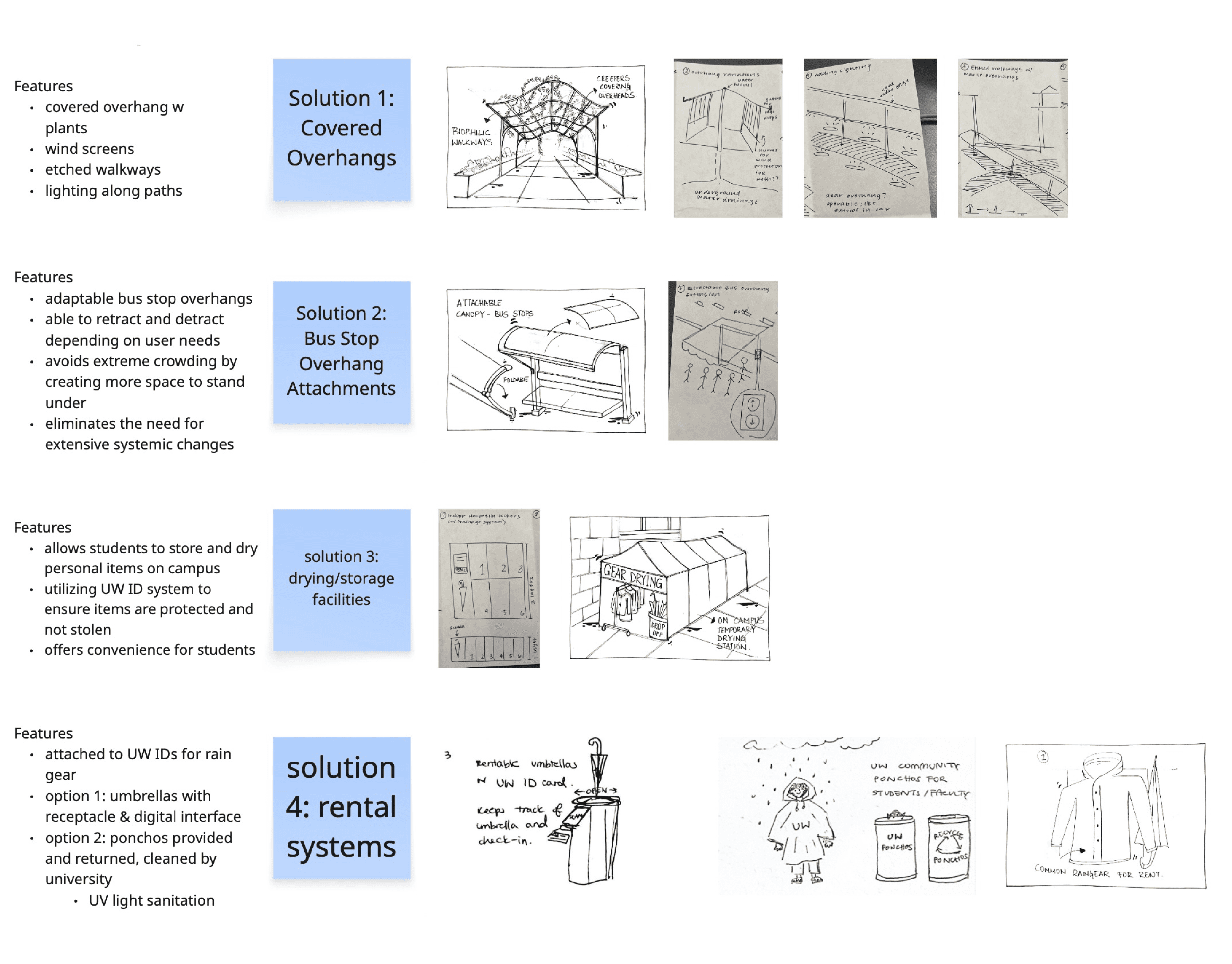
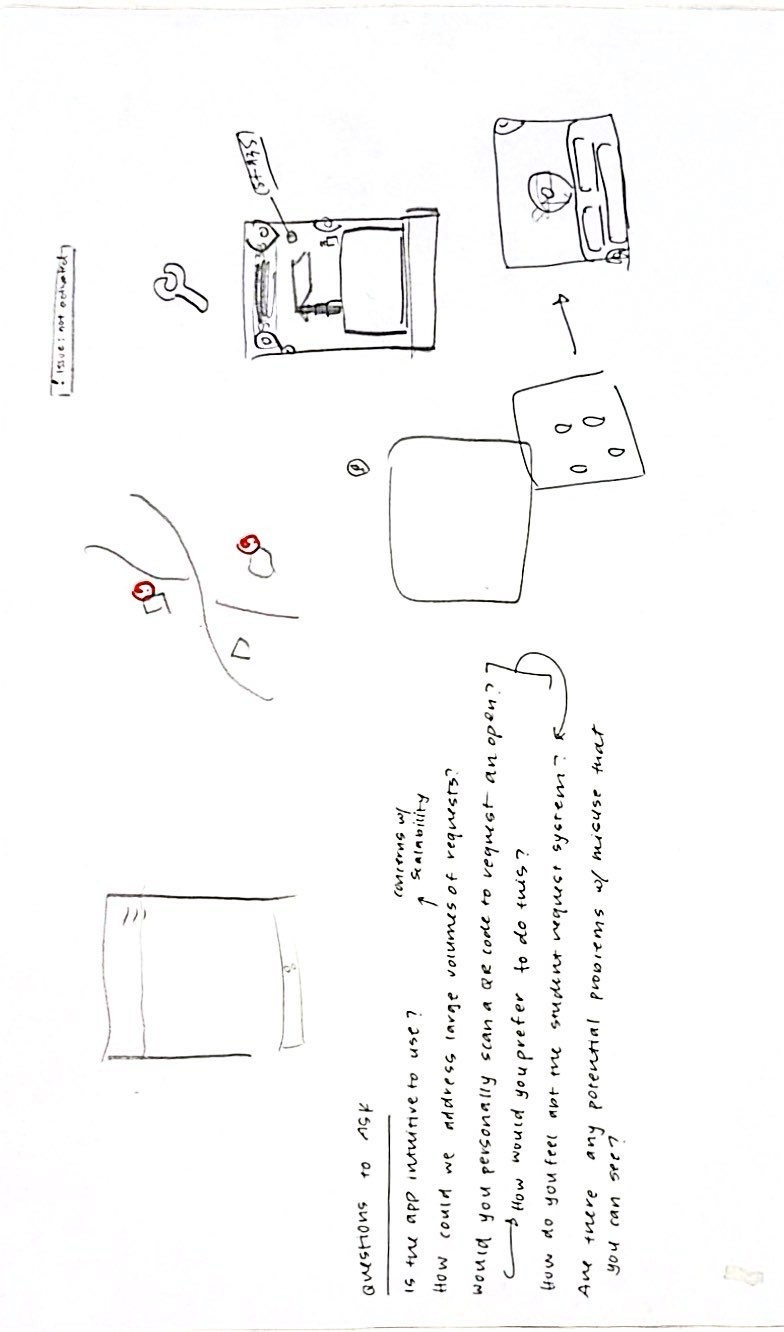
After sketching design ideas individually, our team conducted an affinity-mapping exercise to organize our concepts into four categories: stand-alone overhangs, attached overhangs, drying/storage facilities, and rain gear rental systems.


Develop
Prototypes
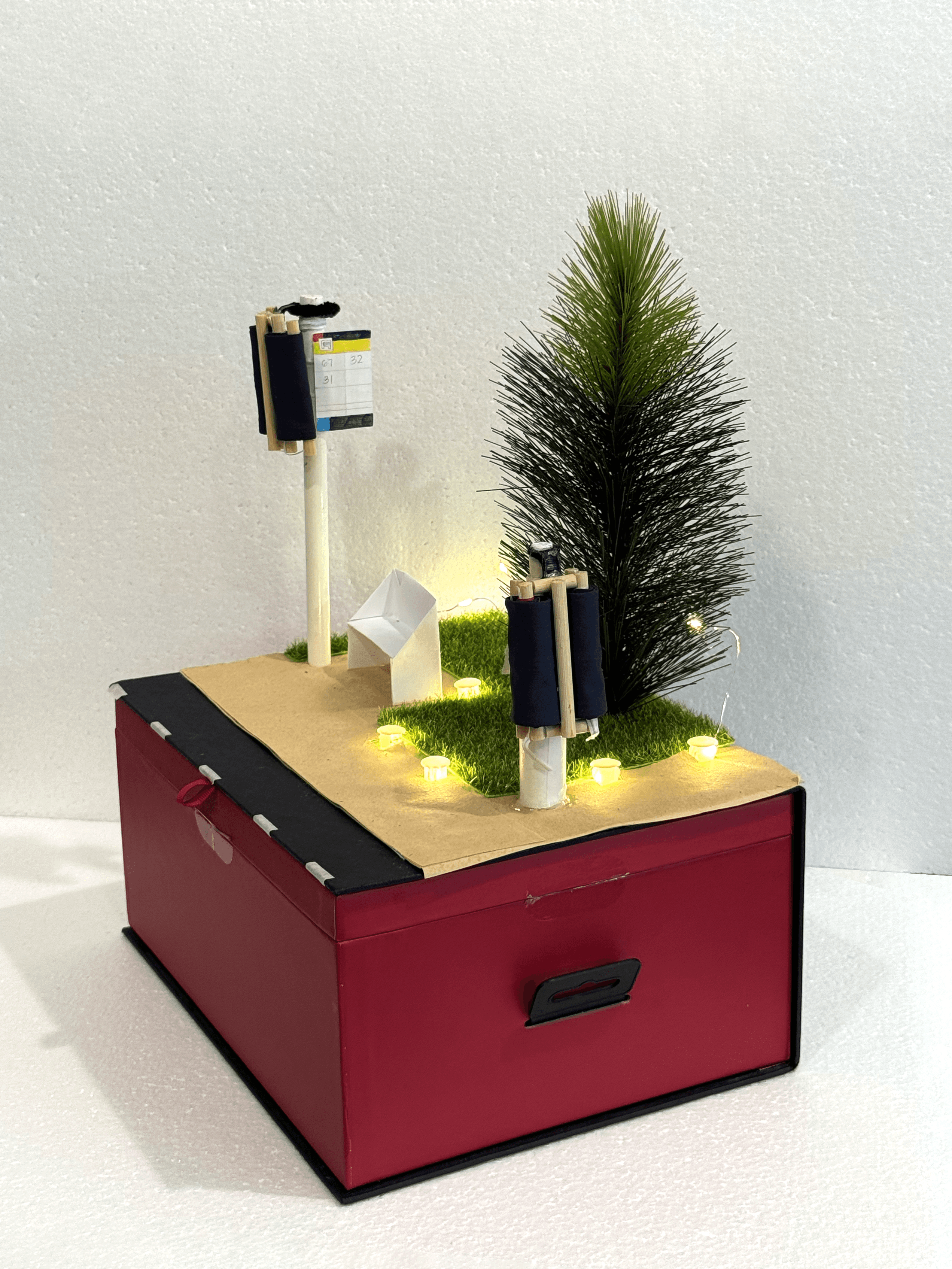
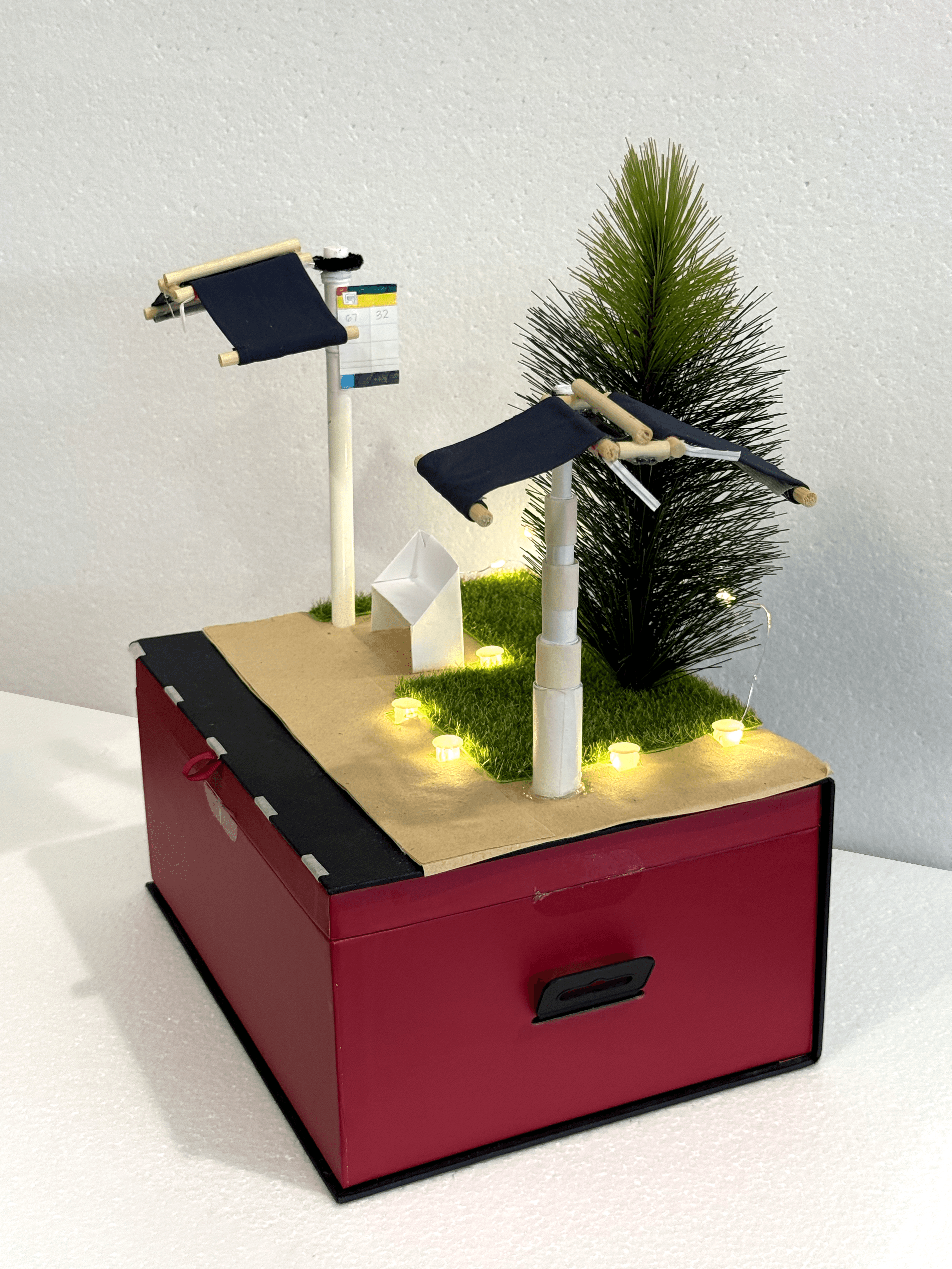
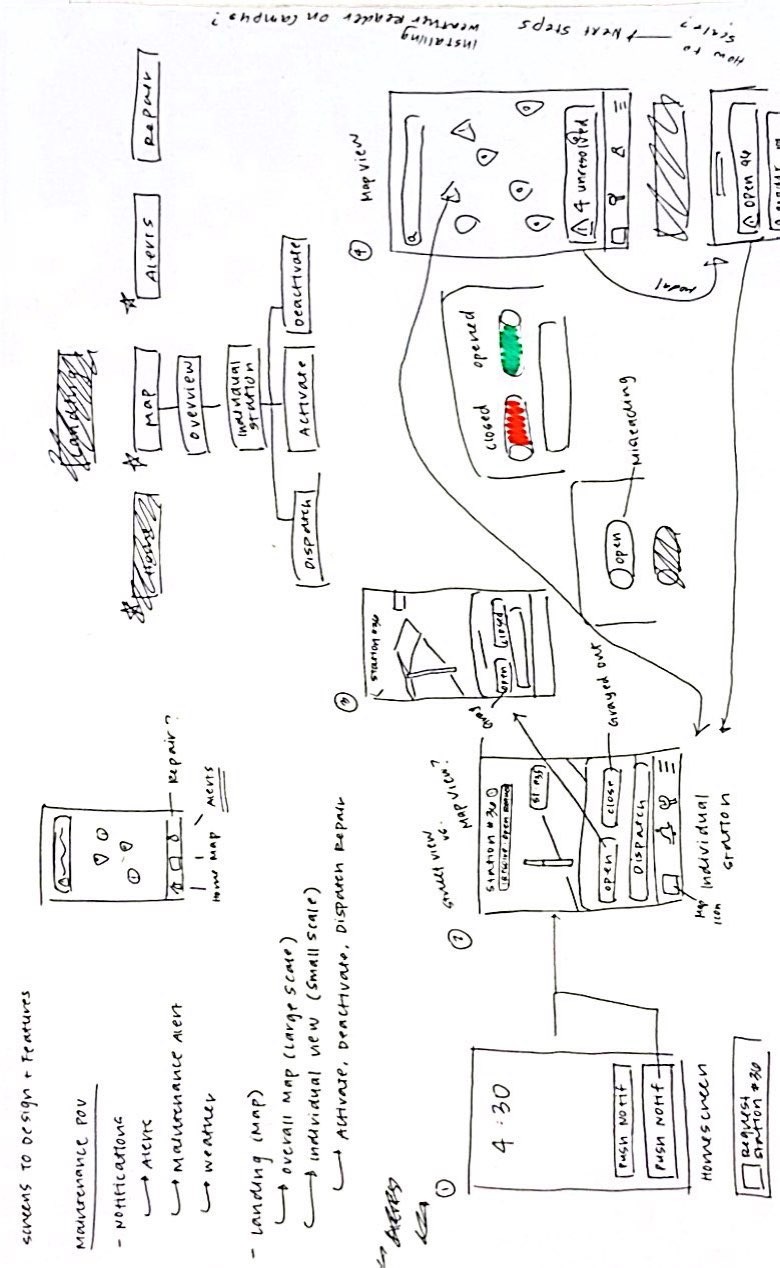
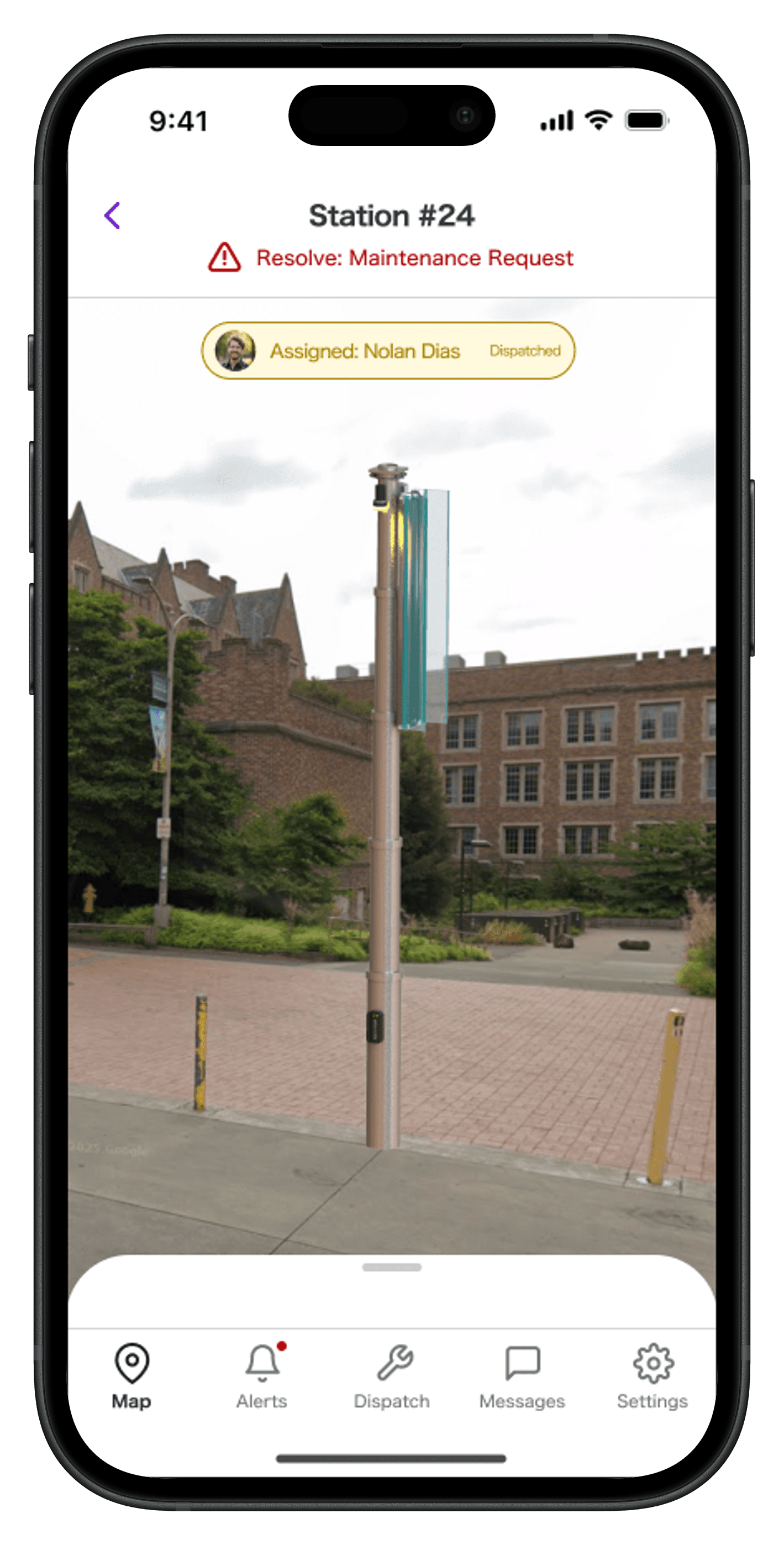
To being getting a better understanding of what the overhang would look like in context, we created a Wizard-of-Oz prototype, building the overhangs and prototyping core user flows for a companion app for UW Maintenance Staff. This prototype was primarily to demonstrate how the staff would manually activate the overhang upon request, mostly to counter instances of misuse that might occur.
This process helped us refine details of the overhang’s mechanical systems and adjust its measurements, in addition to begin scaffolding a structure for the companion app.
Overhang Model


Because the need to design a companion app for maintenance was identified much later in the design process, the time constraint left us unable to conduct formal user research on the UW Maintenance Staff. As a result, many of the design decisions for the app are based on engineering requirements to operate the overhangs and assumptions about logistics . Further research would need to be conducted to understand the staff’s best practices and design the most intuitive flows.
Wireframes


Mid-Fidelity Prototype
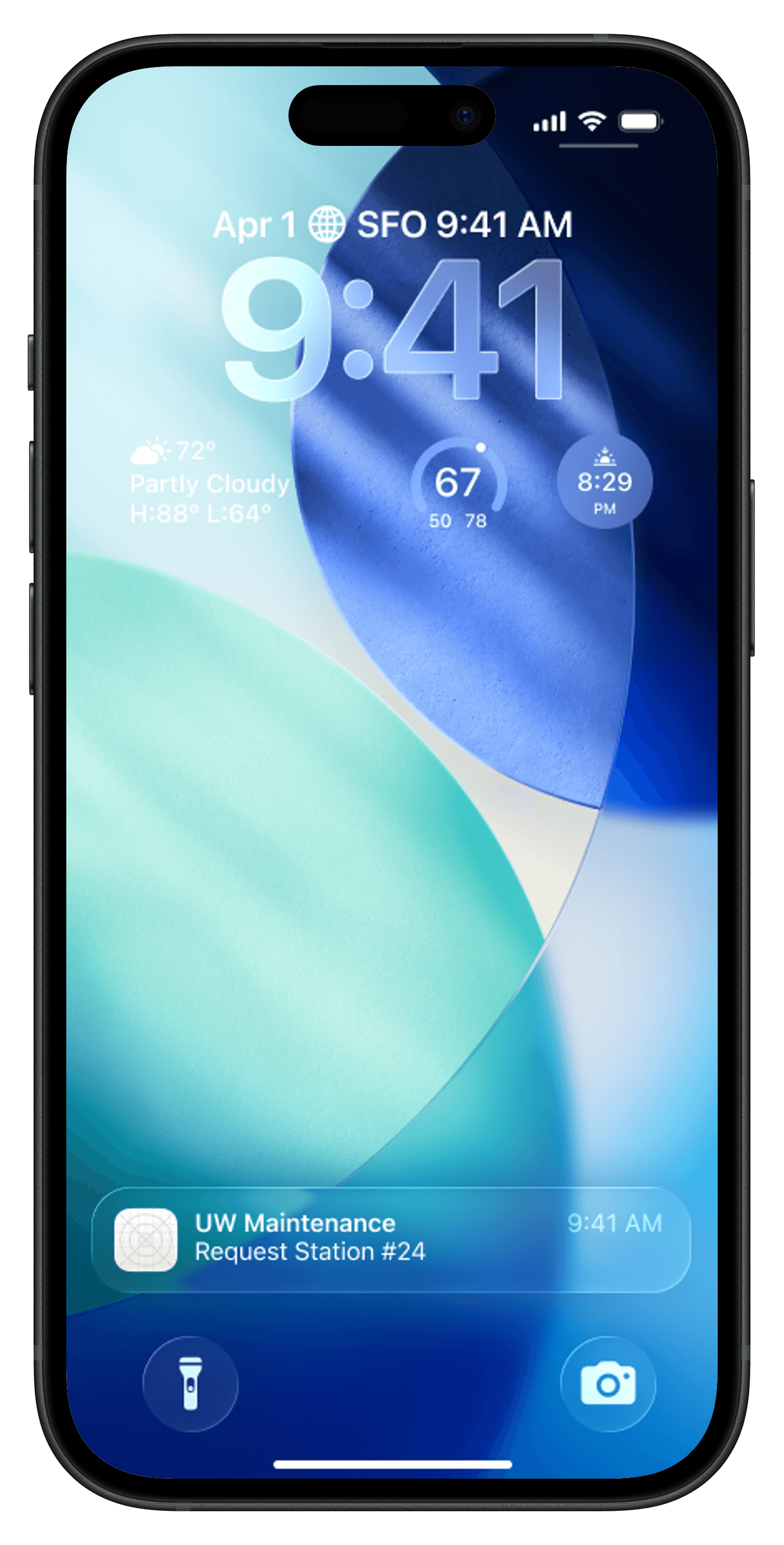


Push Notification
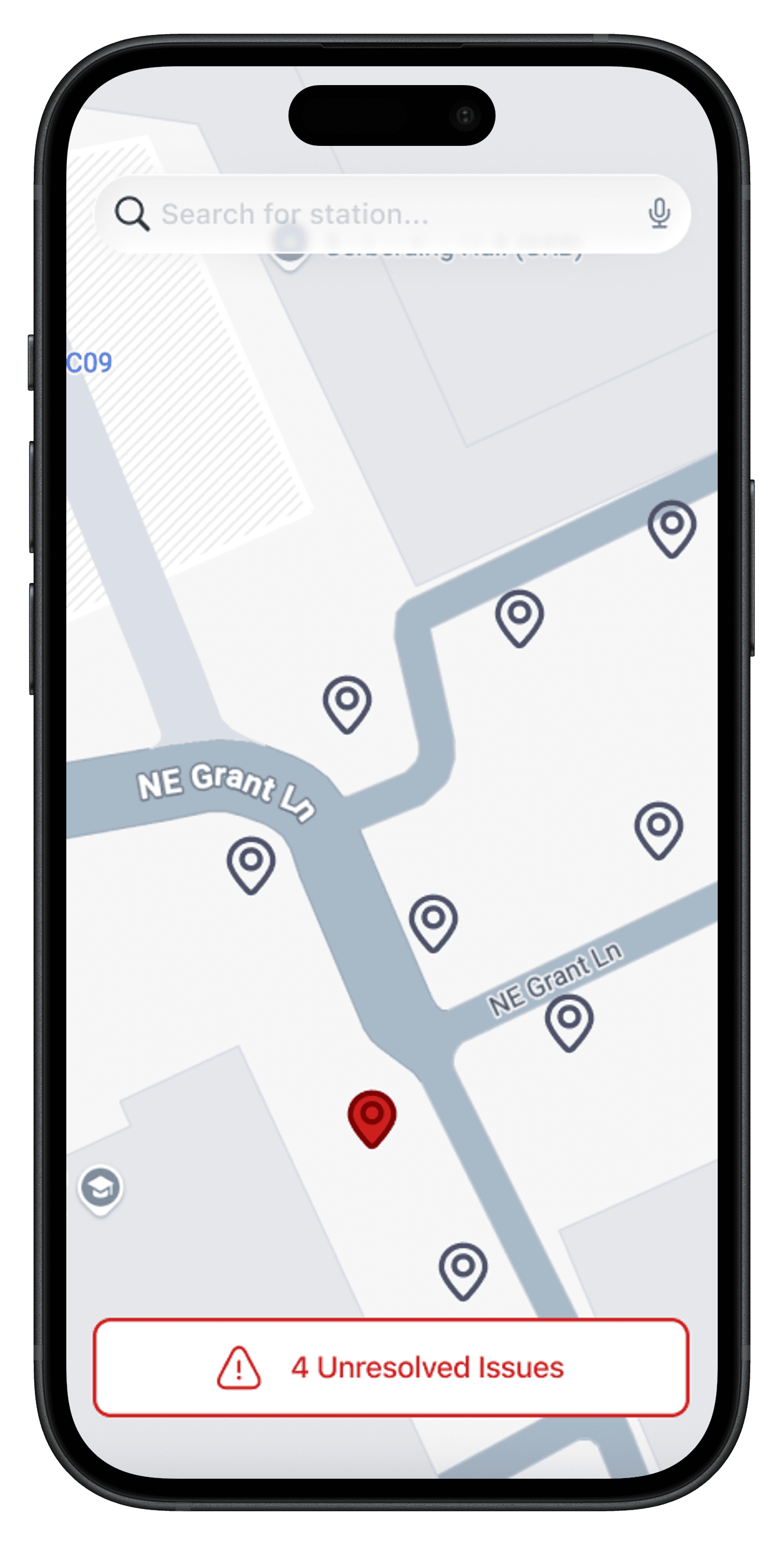
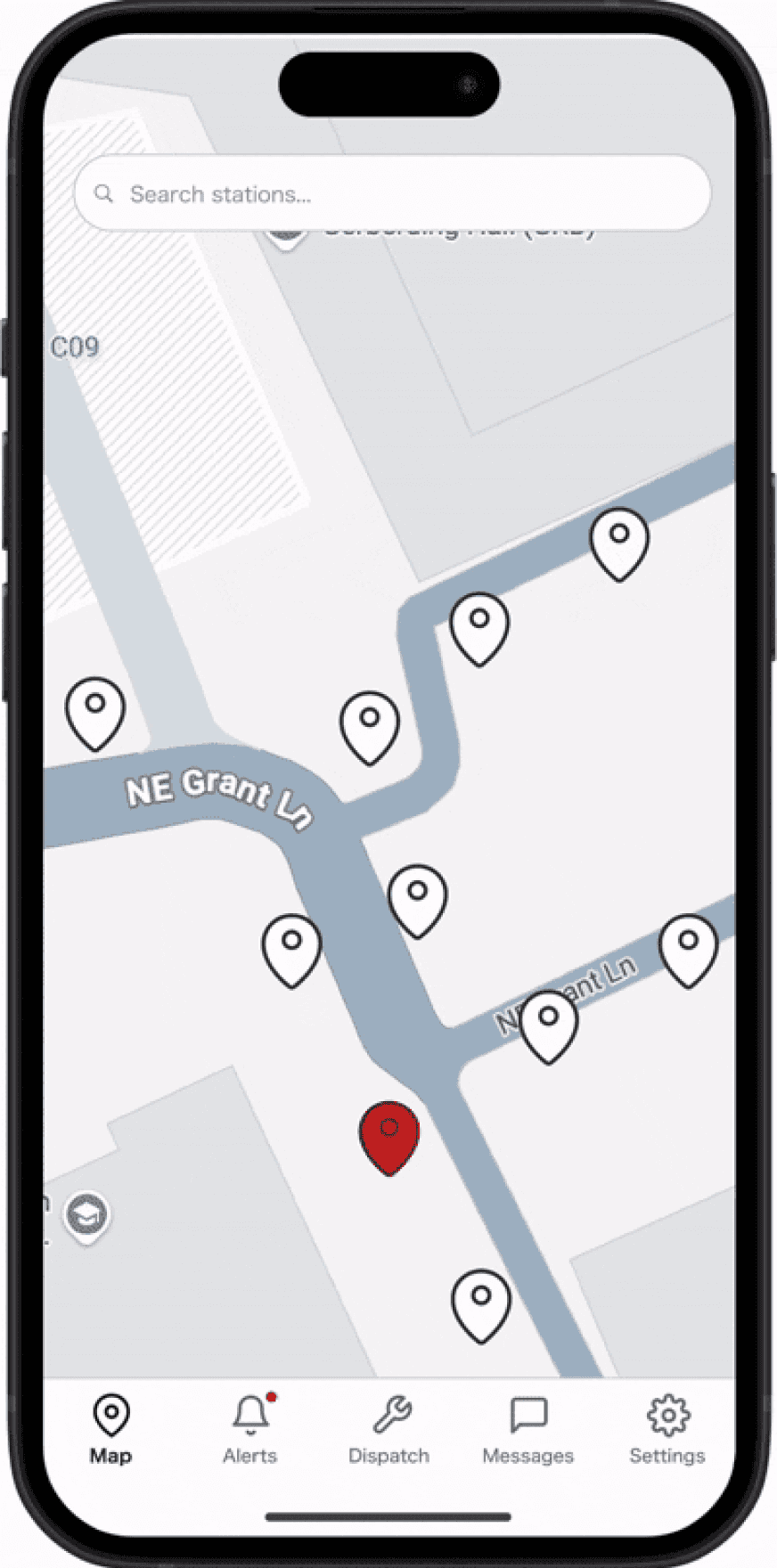
Map View
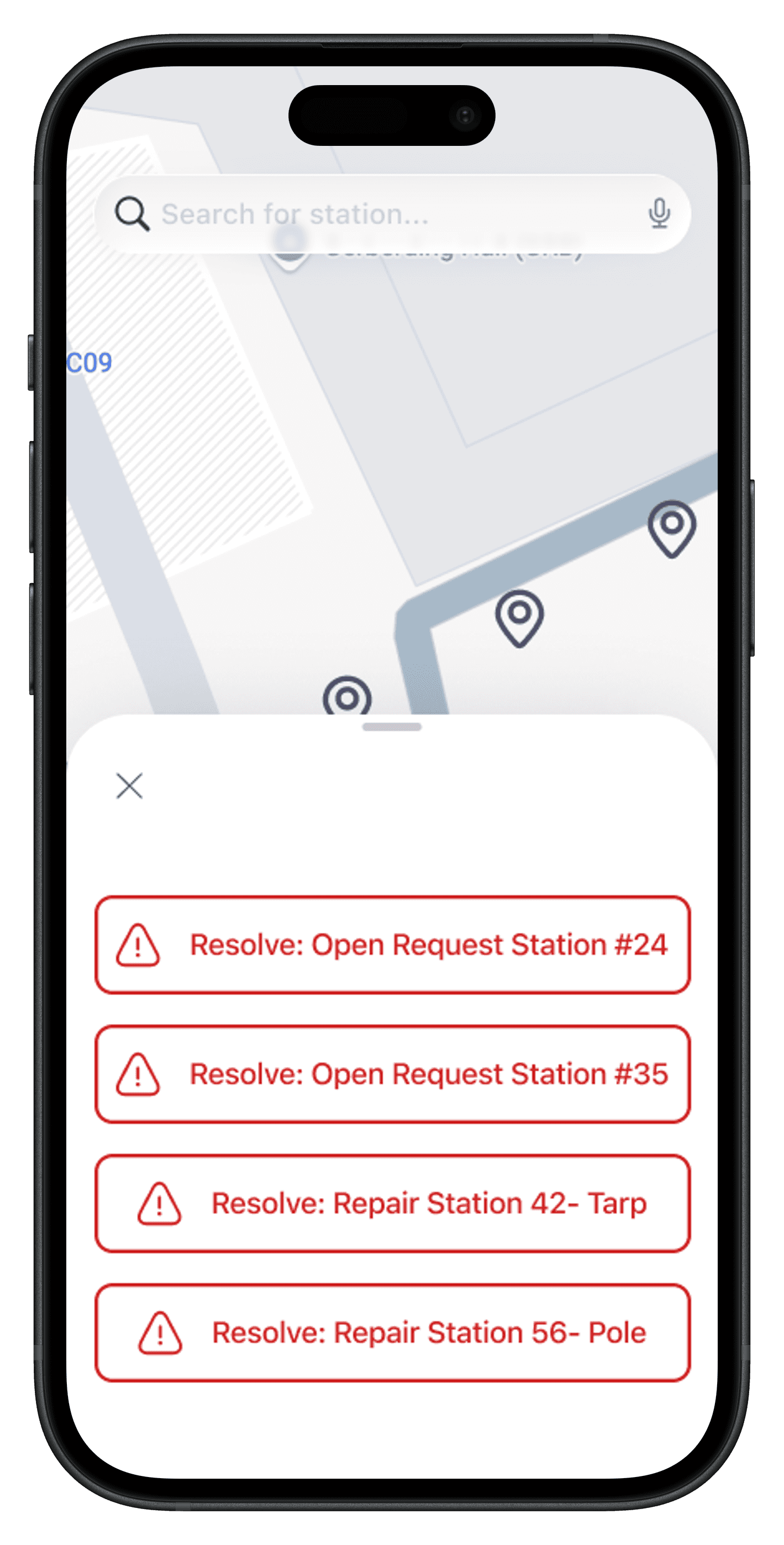
Notification Modal
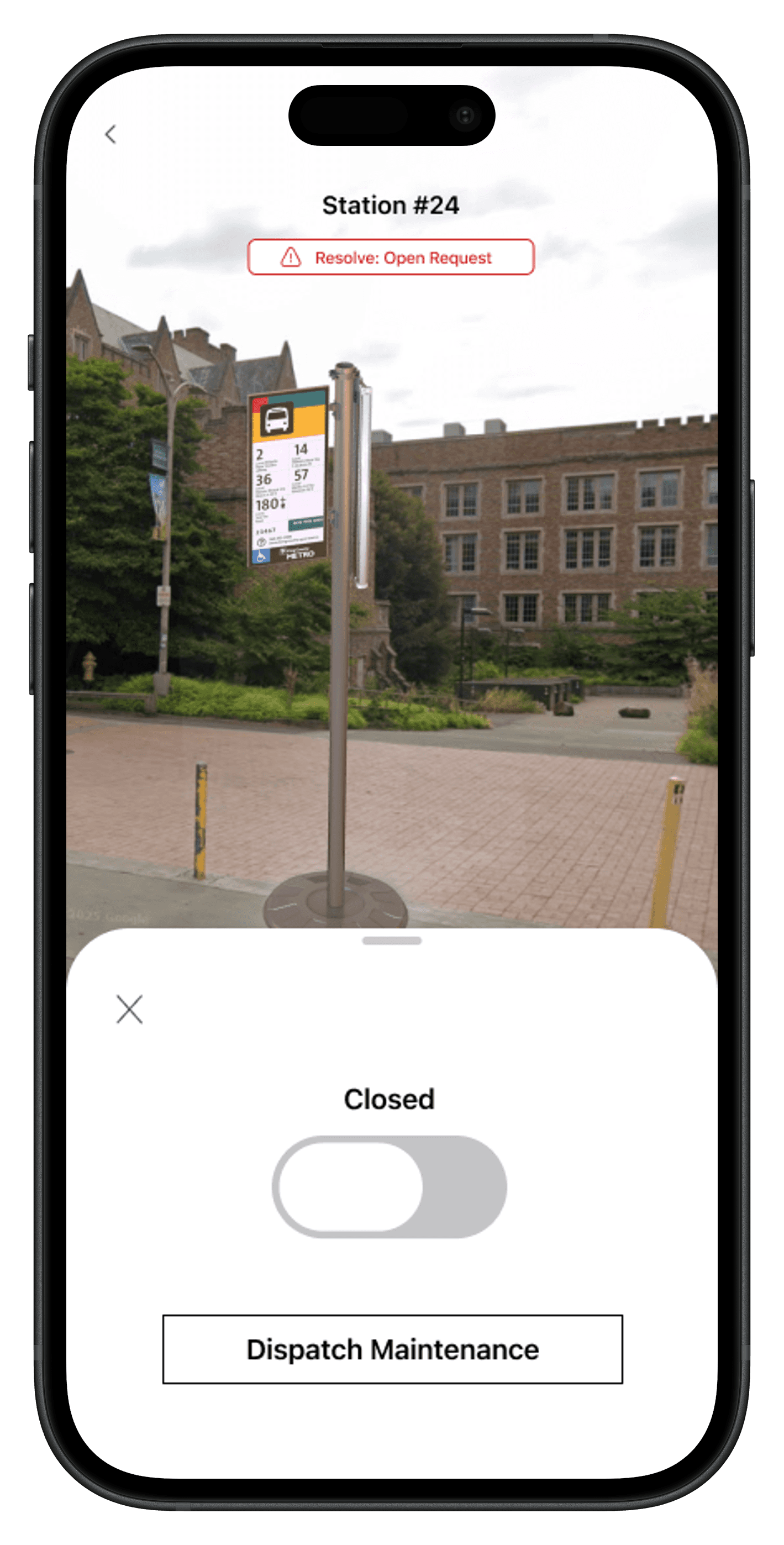
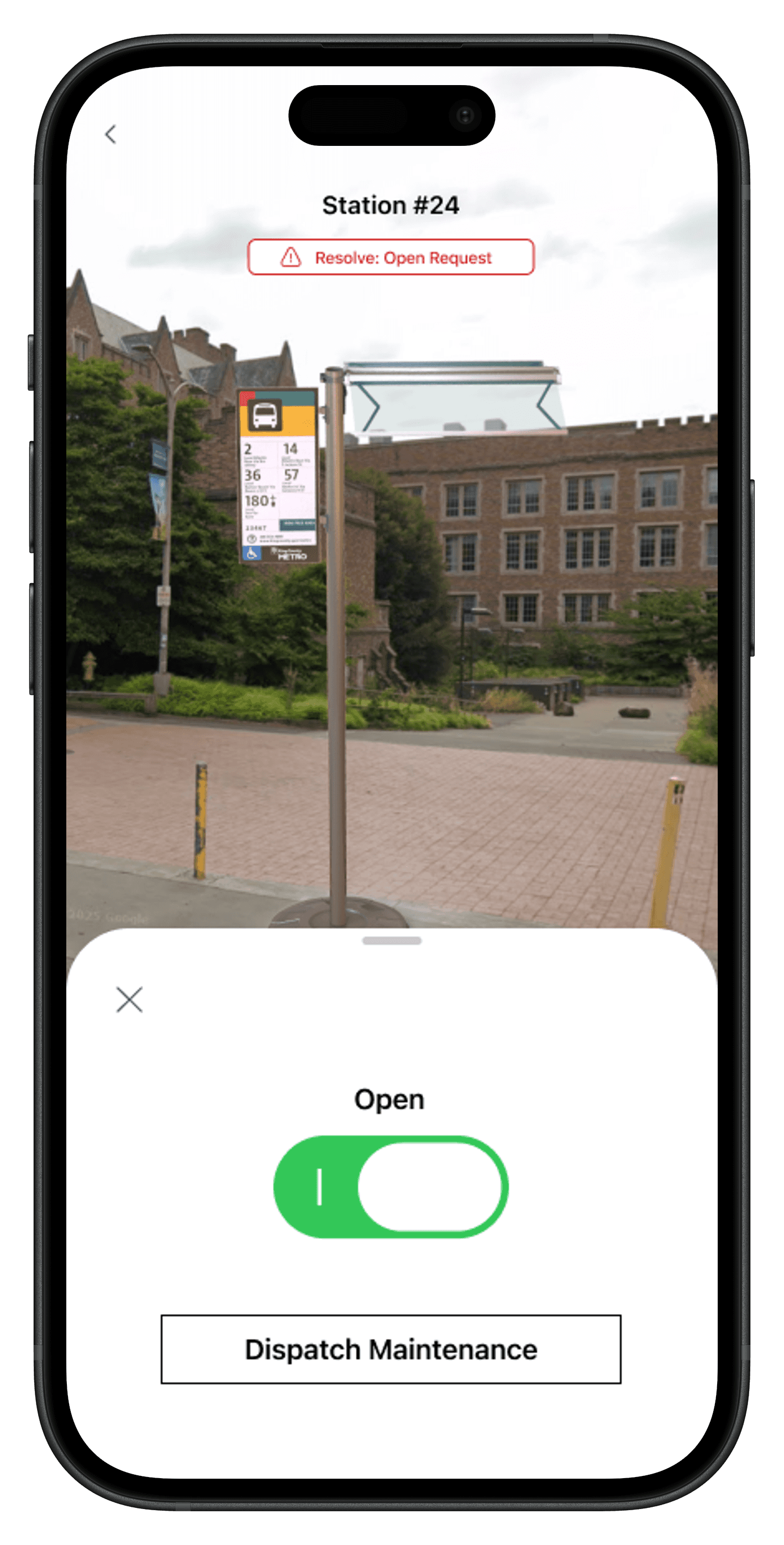
Closed Overhang Settings
Open Overhang Settings
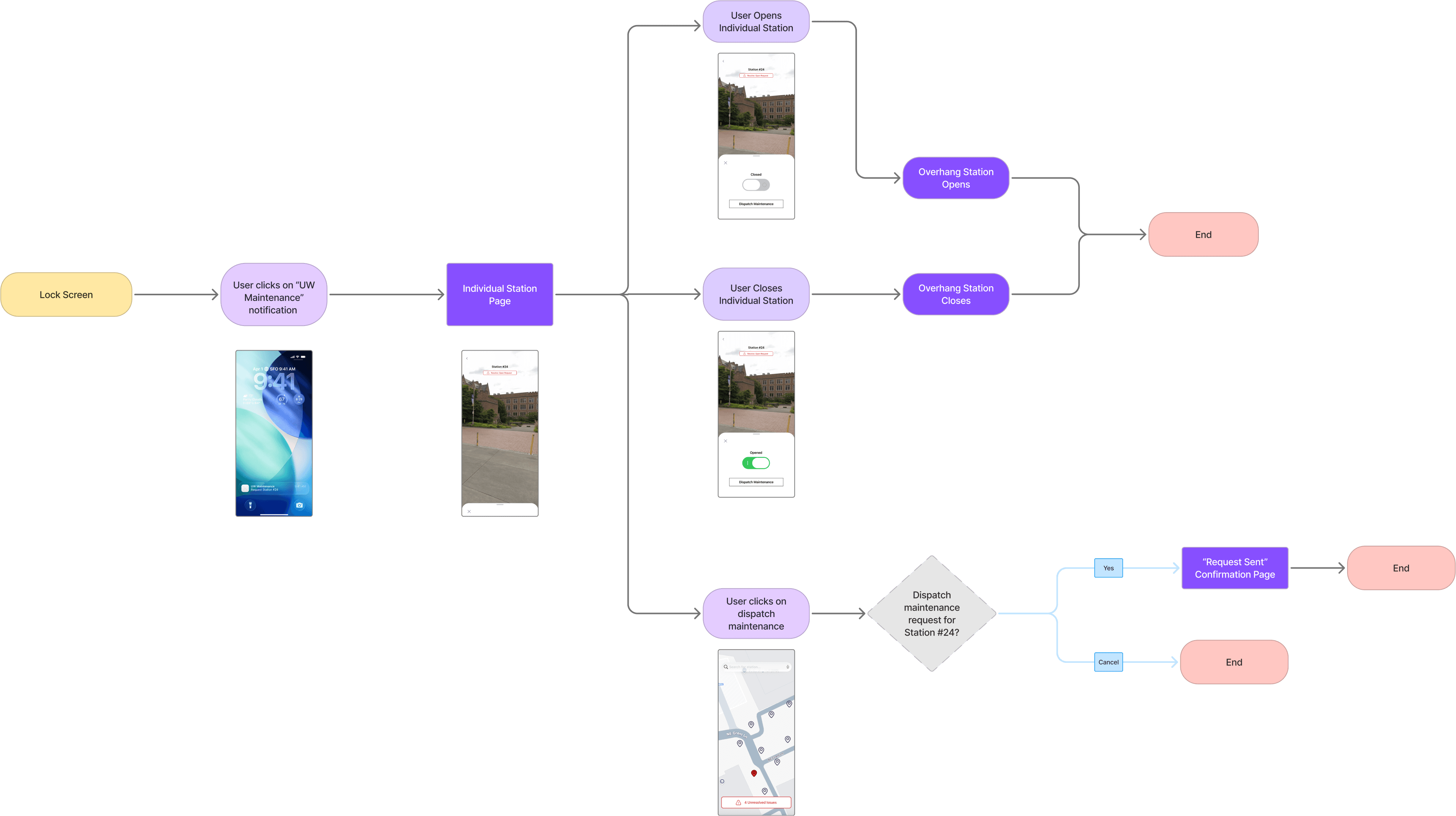
Wizard-of-Oz Flow
User Flow for UW student sending a maintenance request for an individual overhang station.

User Flow for UW Staff after they get a notification about a maintenance request.


Deliver and Test
Phase 1 testing
Process of mid fidelity usability testing
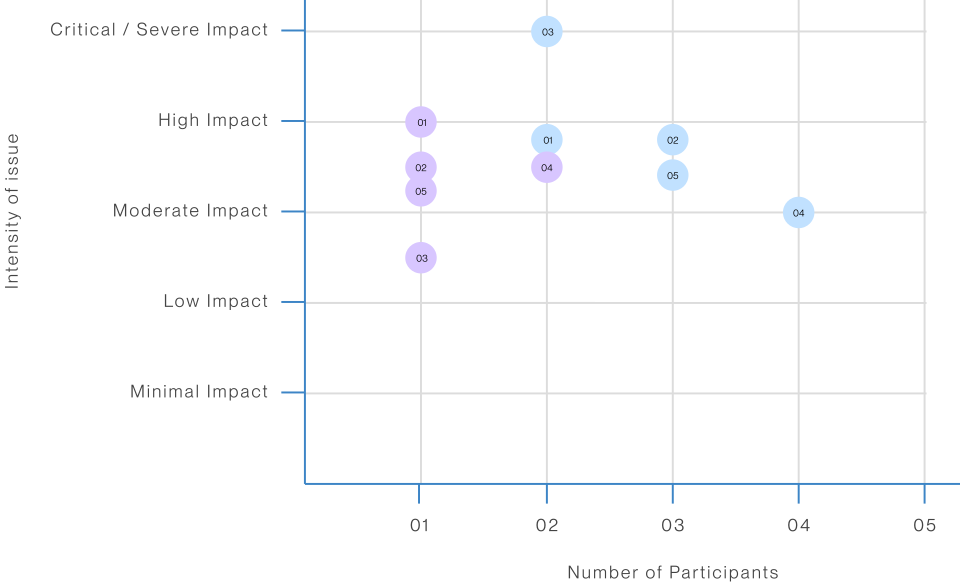
We conducted usability testing with five participants to evaluate the 1:15 scale prototype and maintenance app interface. Each 15-20 minute session involved scenario-based tasks that revealed how users interacted with the QR code activation system, assessed the overhang's perceived effectiveness, and identified friction points in the staff workflow. We analyzed feedback using an intensity-vs-scope framework, plotting each issue by severity and participant frequency to prioritize design revisions systematically.
Product Feedback
01. Size of the overhang being less to accommodate sufficient people. II
02. Concern with sideways blowing wind and rain not protecting adequately. III
03. Safety and strength concerns about the overhang in windy conditions. II
04. Concerns with the QR code scanning to activate. IIII
05. Time concerns about the activation of the overhang. III
Application Feedback
01. Confusing labelling/terminology use in the application. I
02. Lacks appropriate feedback provision. I
03. Labelling the overhang better for better communication. I
04. Suggested consideration of all use-cases (How would we show a broken overhang, multi request handing) II
05. Include features of resolved issues I
Key Testing Insights
Automation
The QR code activation method created significant friction, with 4 out of 5 participants preferring either physical buttons or automated deployment. Users demonstrated a one-minute patience threshold before abandoning closed overhangs, indicating that our staff-mediated approval process would fail in real-world conditions.
Sideways Wind
Physical design concerns emerged around size capacity and wind resistance, with participants noting the current dimensions would inadequately serve typical bus stop crowds during Seattle's sideways rain.
Accounting for Scalability
When the overhang system starts scaling in size across campus, the Notifications Modal would become difficult to navigate due to the sheer volume of requests that would come in. Users suggested features like notification filters to help account for this volume over time.
The Final Product
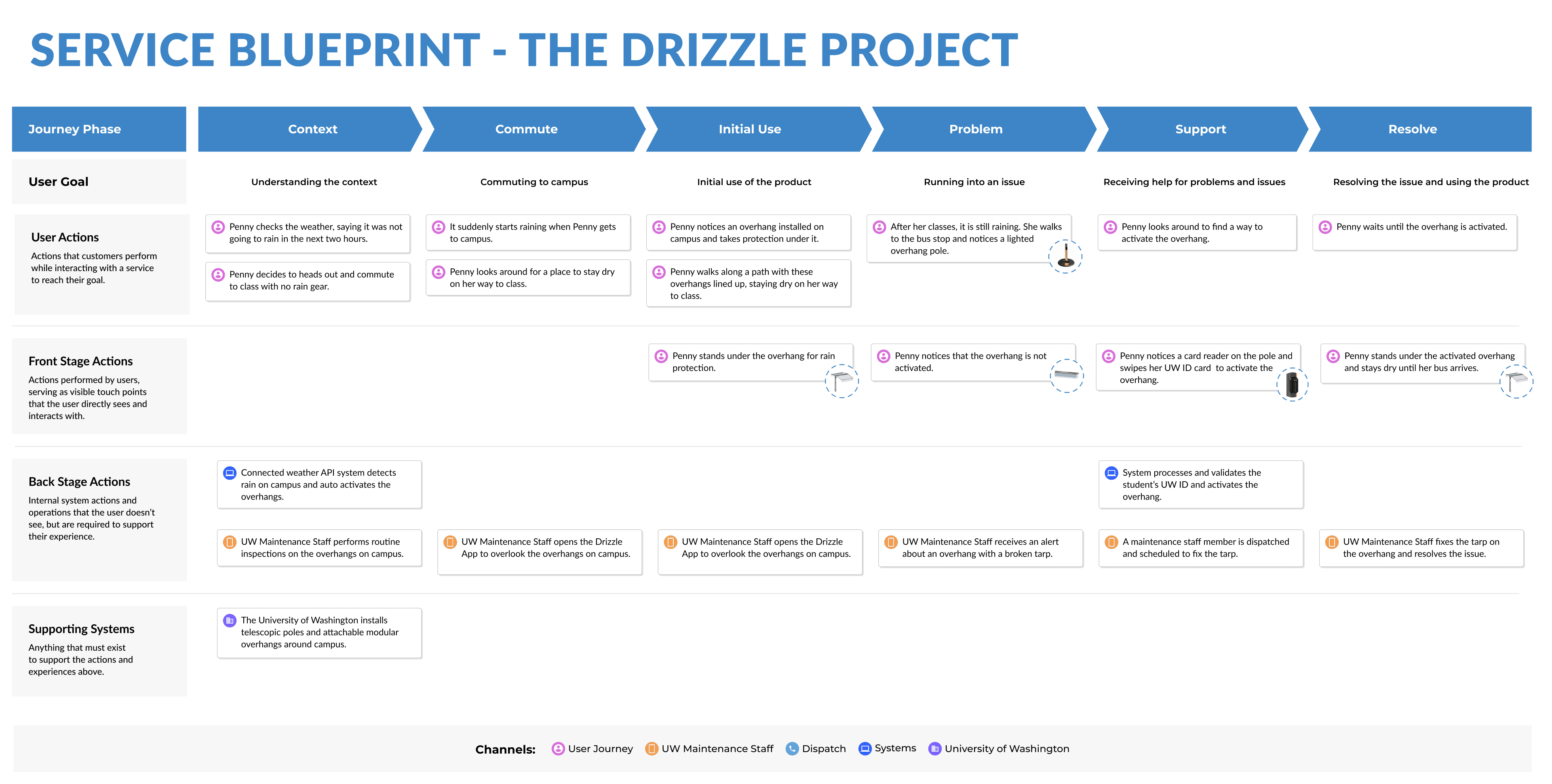
The service blueprint summarizes the end-to-end experience of The Drizzle Project. It illustrates how students interact with the modular overhang system on campus and how the UW Maintenance Staff and backend systems support those interactions. By visualizing multiple user flows that integrate, the blueprint clarifies how the system works together.

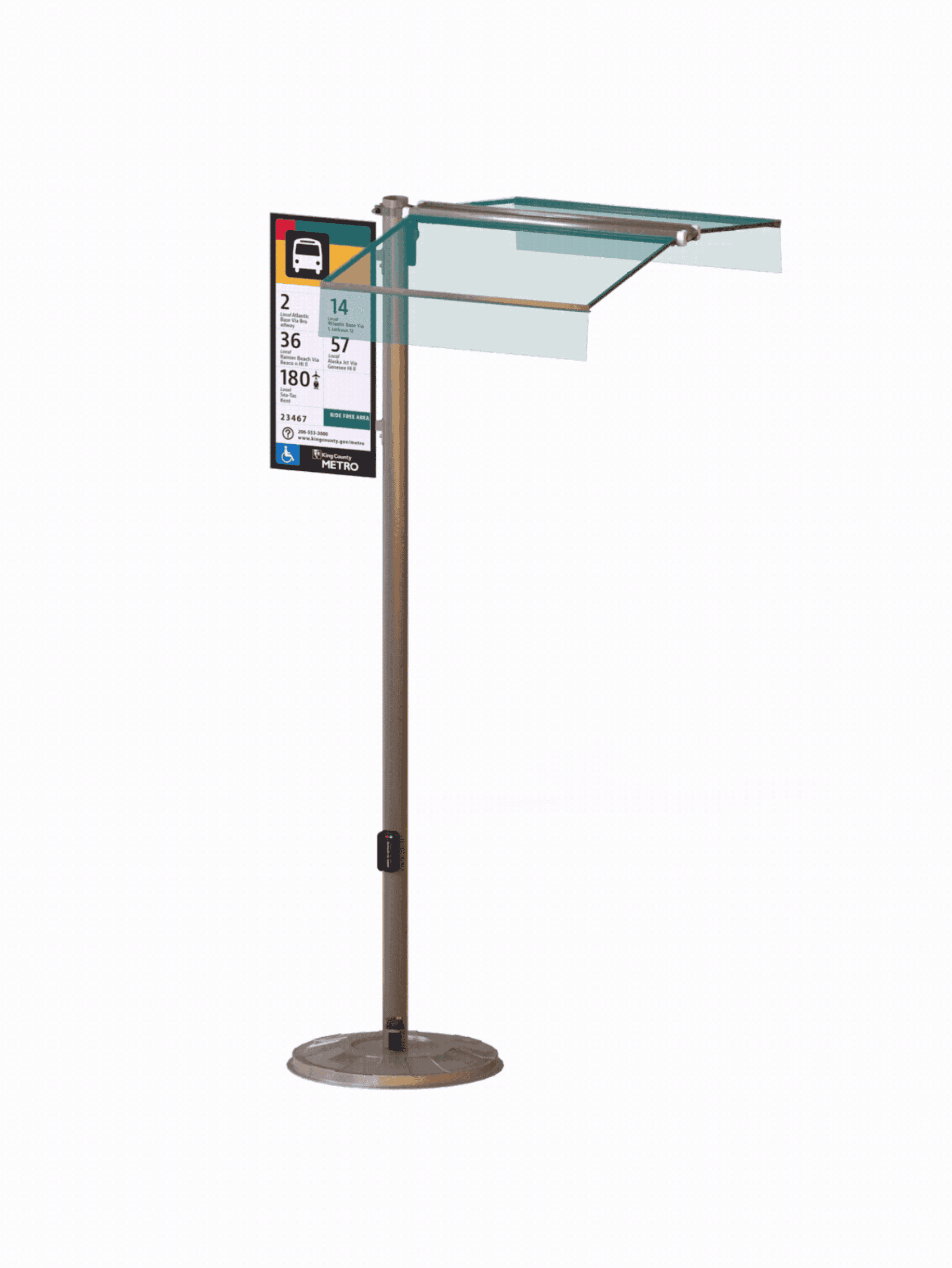
The Drizzle Modular Overhang
The Drizzle Project addresses this issue by introducing an integrated system of modular overhangs installed and maintained by the institution. This solution enables students who frequently commute and walk around campus to stay dry without relying on expensive rain gear or carrying heavy rain equipment. Additionally, this solution provides an accessible option for students with mobility challenges, offering sheltered places to rest and eliminating the need to manage additional rain gear.


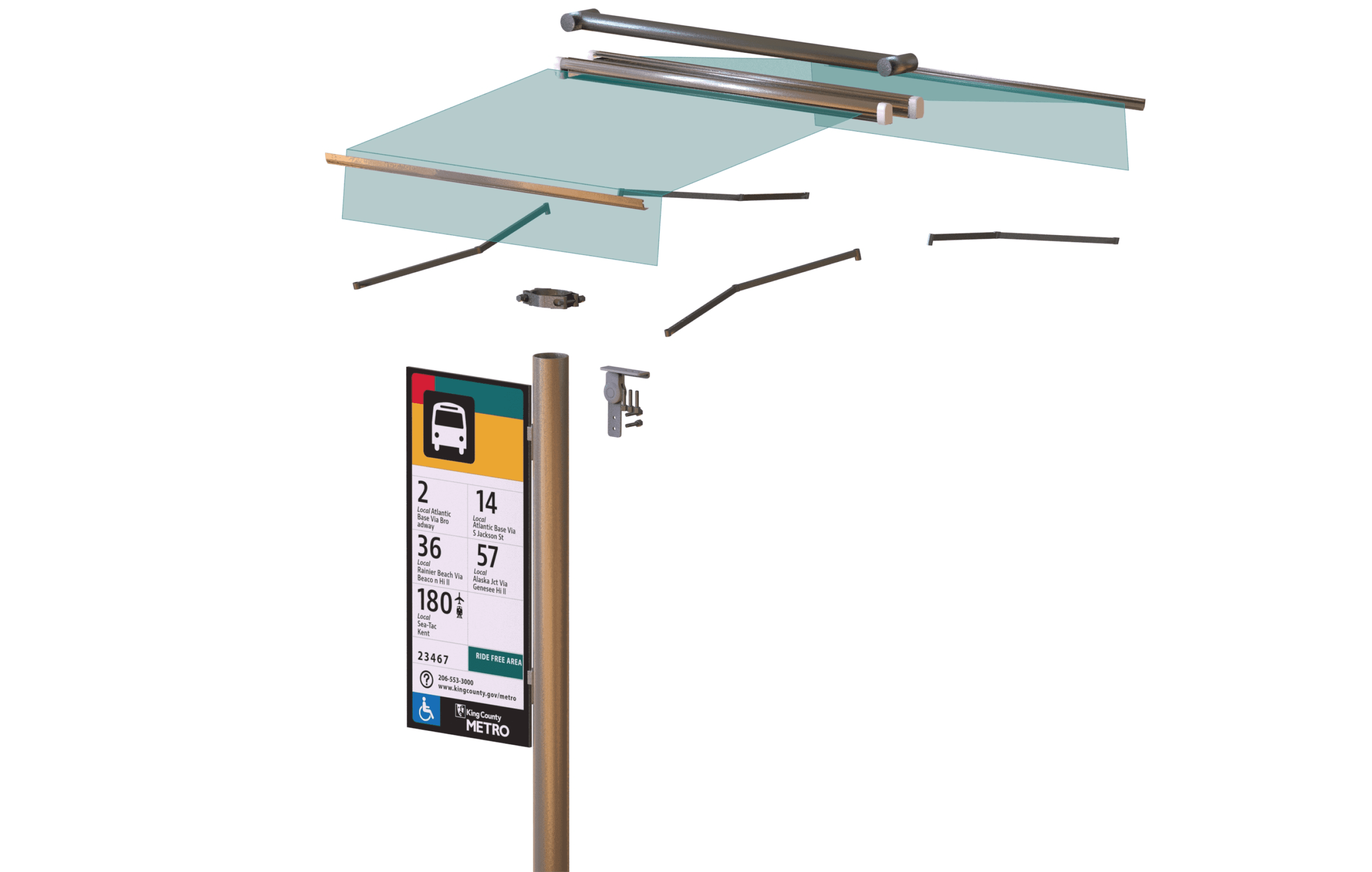
Deployment process of overhang attachment on existing poles
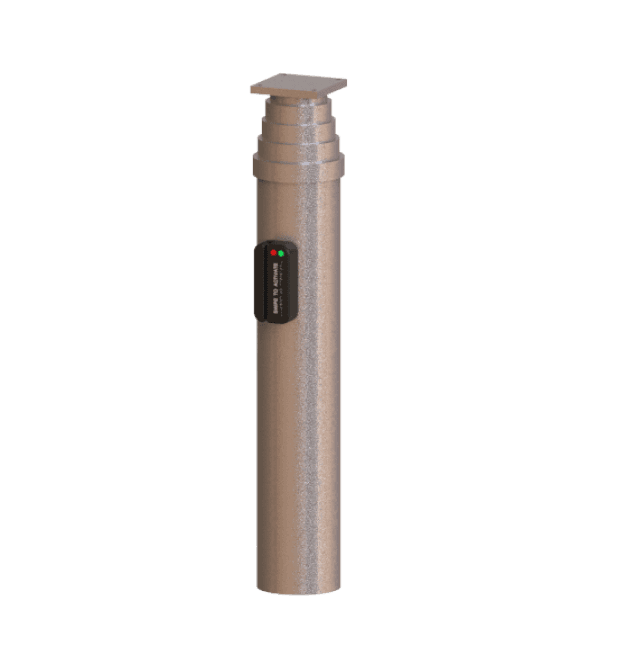
Deployment process of overhang attachment on telescopic poles
Features
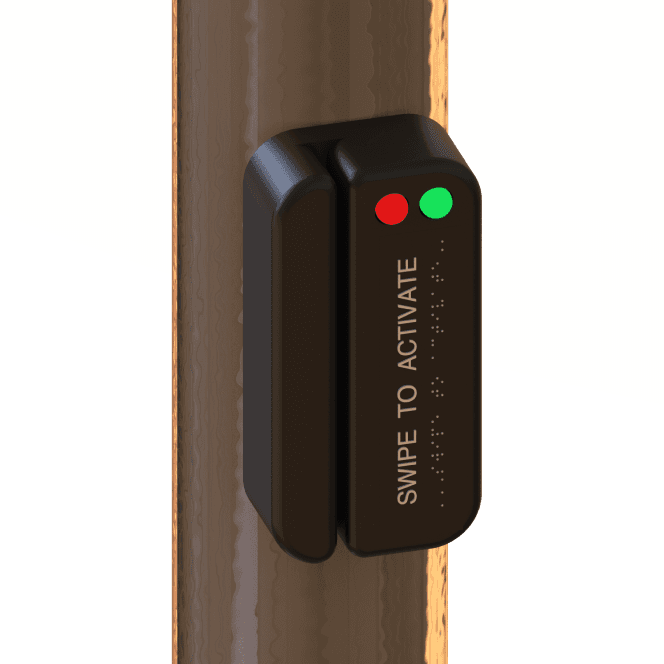
The Drizzle Project introduces two key components: The Drizzle Modular Overhang and The Drizzle App used by UW staff to maintain these systems.
The Drizzle Project offers an accessible, safe, and convenient way for students to stay dry on campus.


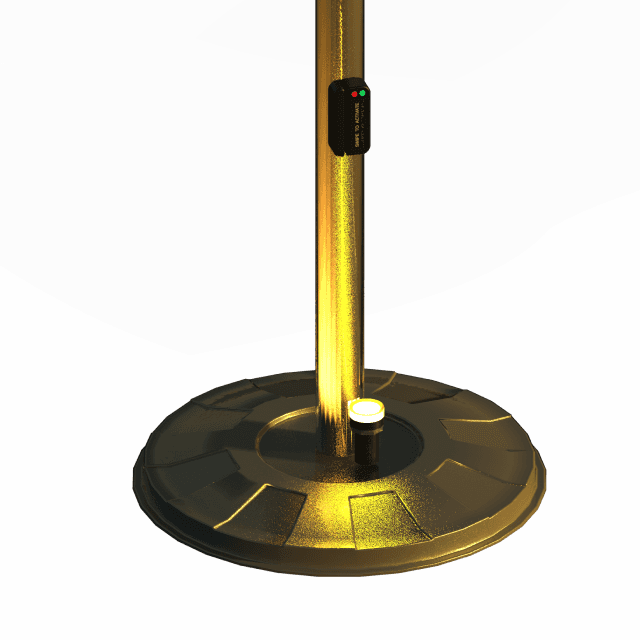
UW ID Scanner
Manual backup for shelter deployment.
Lighting Fixtures
Built-in lights for visibility and safety.
Telescopic Pole
Foldable poles for quick shelters.
Specifications
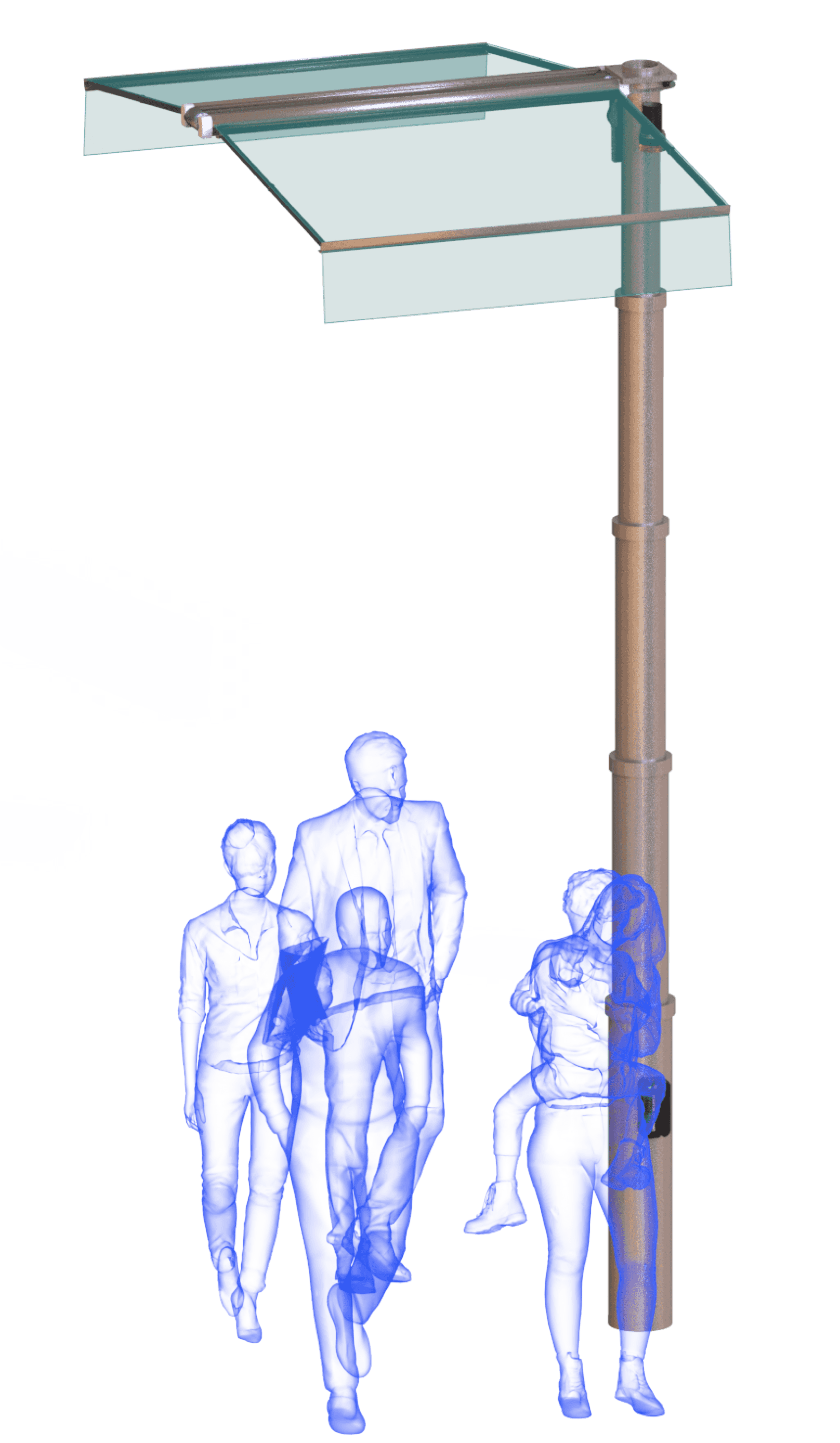
The Drizzle Modular Overhang envisions a retractable rain-shield system that seamlessly integrates into existing vertical poles. This can include bus stop poles, light poles, or traffic poles across UW campus. In large open spaces, like Red Square, a collapsible pole can be installed to support the overhang.

The overhead
The awning arm that allows the retractibility
two-sided clamp for better strength
The cover in which the overhang rolls into
Detent hinge allowing for 90° closing and opening
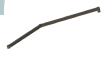


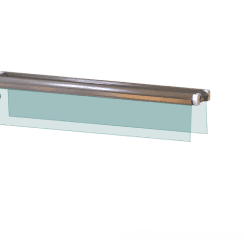
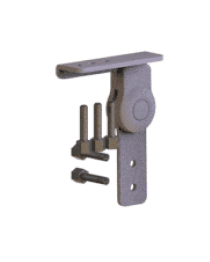
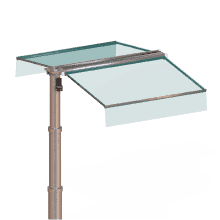
Measurements
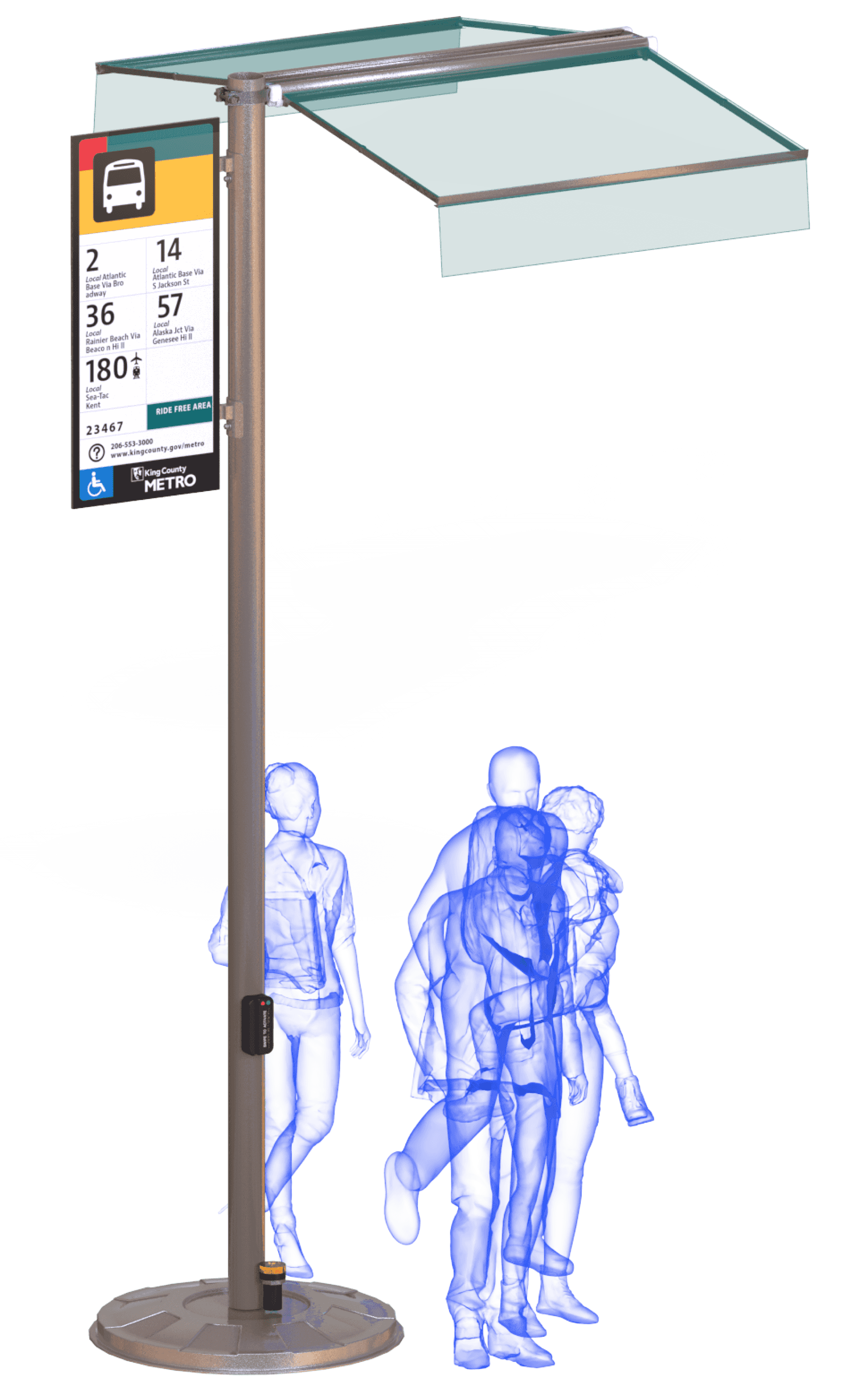
The final design measurements were based on the 115.25" bus pole height, allowing 36" overhangs without obstructing height clearance. Each side stands 42" tall, accommodating about 5–6 people, and these proportions were validated through 3D simulation using real dimensions. (Measurements in inches)


115.25
6
42
36
80°
The Drizzle Companion App
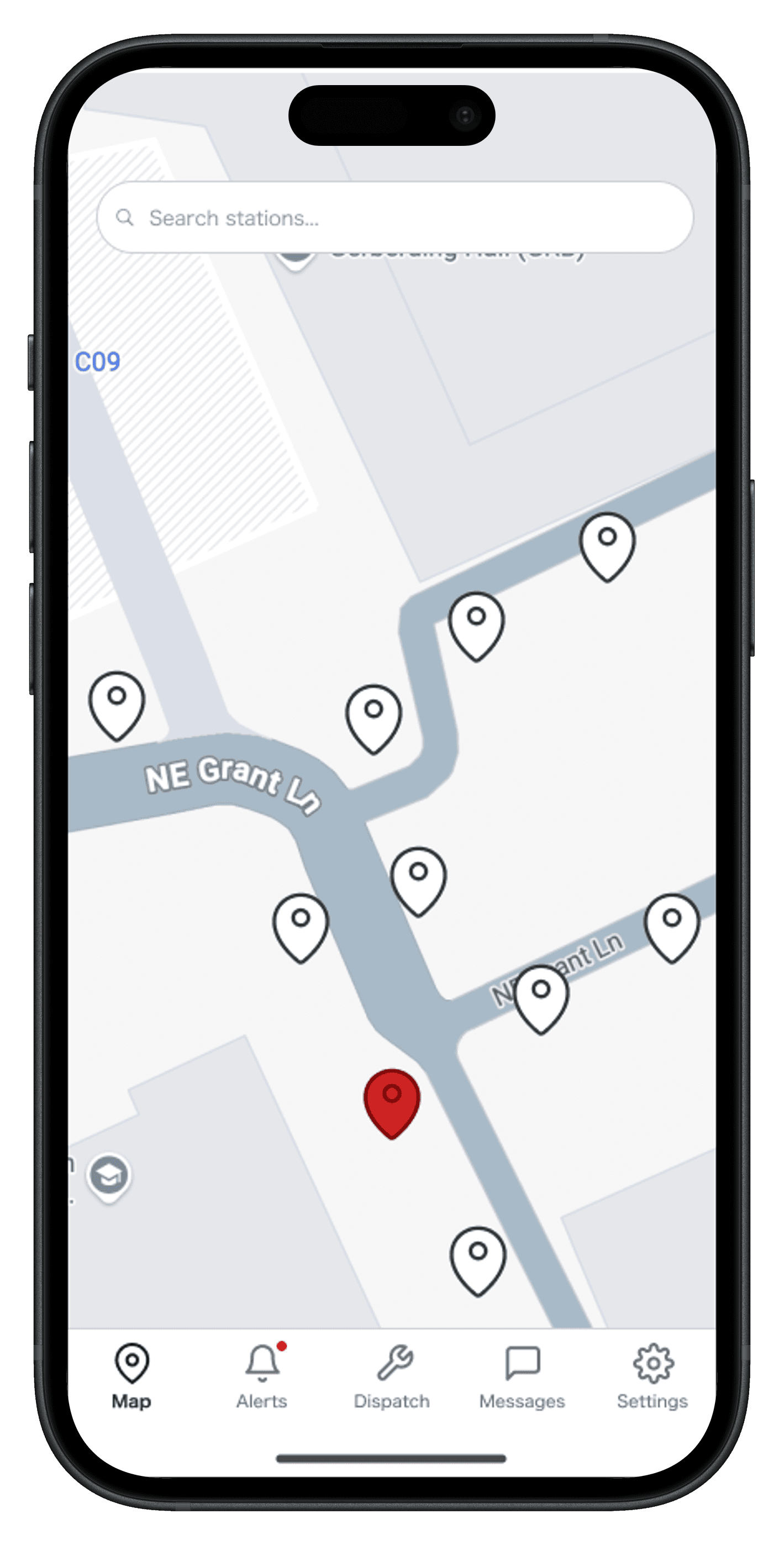
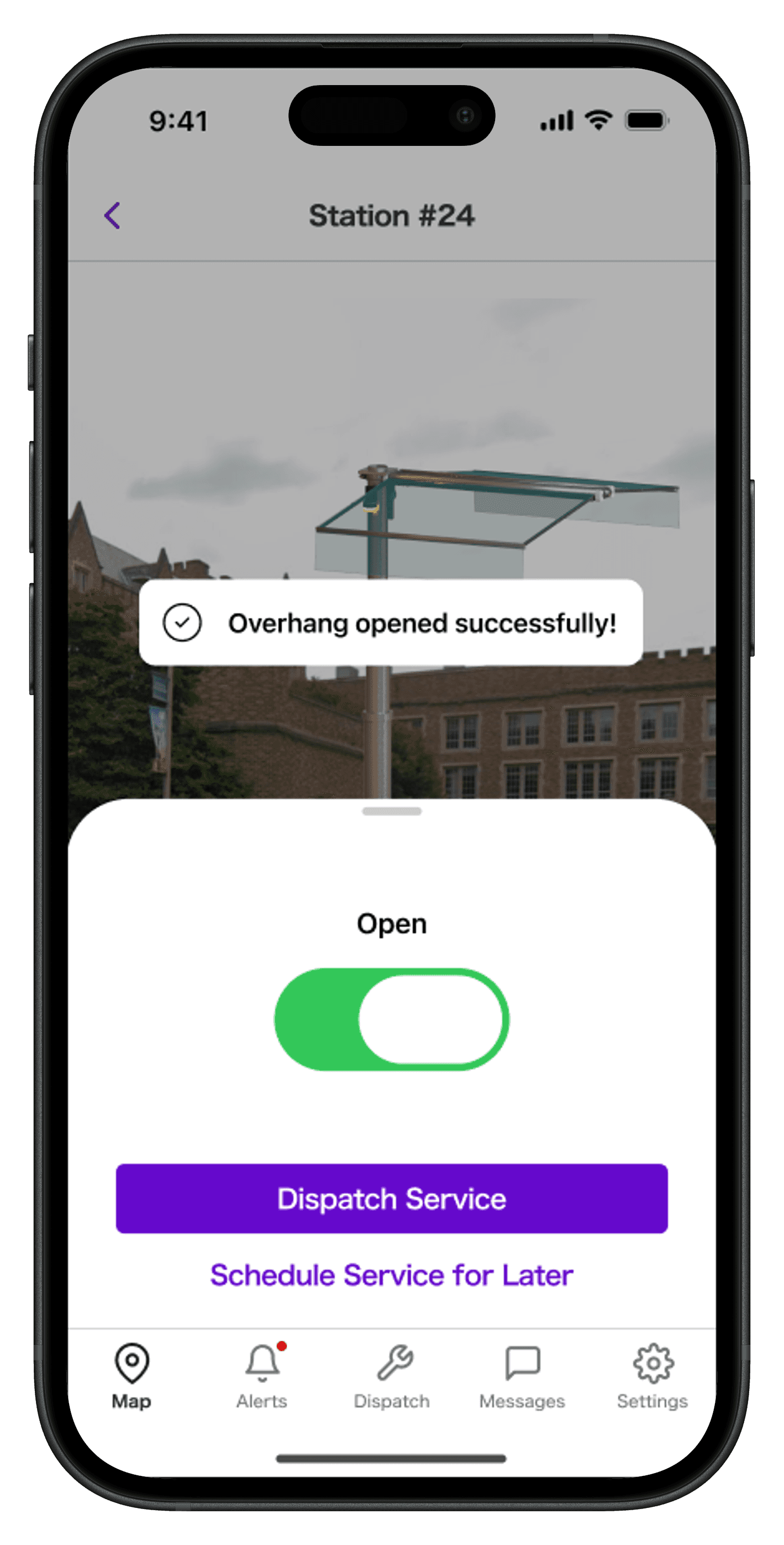
The Drizzle App is a companion app for UW Maintenance Staff to monitor the overall wellbeing of the overhang system around campus. Its integrated weather API provides weather forecast data that allows for the automation of the overhang system above a rain probability threshold.
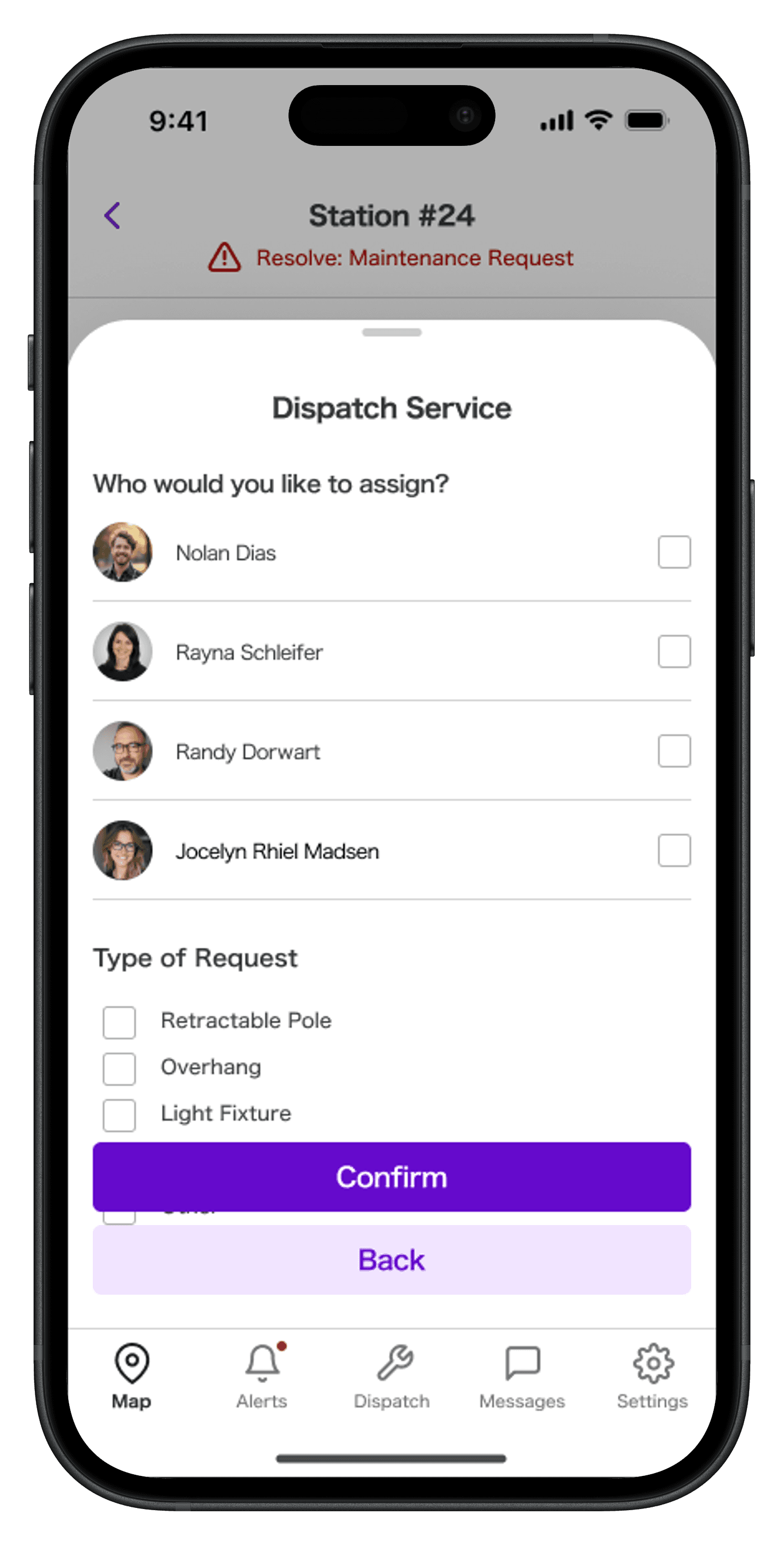
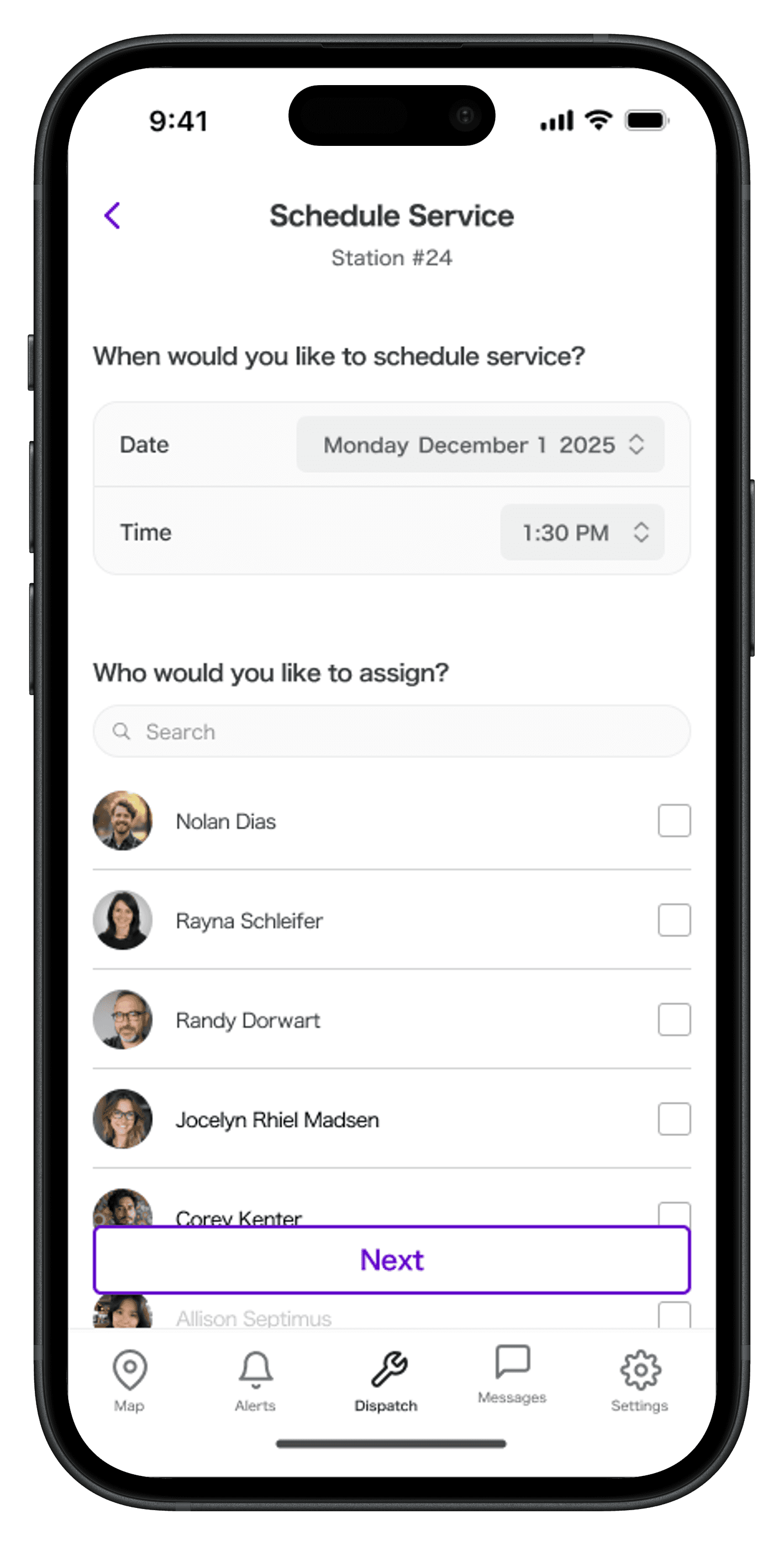
Core flows include manual open/close, immediate service dispatch, scheduling service, and notification filters.


Manual On/Off
Immediate Dispatch
Scheduled Service
Notification Filters

Challenges & Reflection
Challenges
Time Constraints
Validating physical infrastructure within academic timeline constraints without access to full-scale prototyping or weather simulation capabilities.
Limited Sample Size
Extracting actionable insights from limited participant pool (5 users) within compressed 15-20 minute testing sessions across three evaluation domains.
Models and Stress Tests
Balancing prototype fidelity limitations—1:15 scale model couldn't demonstrate wind resistance or mechanical stress, requiring reliance on hypothetical scenarios.
Inaccessibility to Stakeholders
Testing multi-sided platform without stakeholder access—designed maintenance staff app based on assumptions rather than direct workflow observation.
Reflections
01
Stakeholder Inclusion:
Omitting UW facilities staff from early research led to inaccurate workflow assumptions in the maintenance app, teaching us that every stakeholder, especially operational users, must be directly involved to build effective, multi-sided solutions.
02
Iterative Validation:
We realized the value of testing specific features (like QR code scan) before full integration and incorporating behavioral scenarios early to ensure richer, more reliable insights throughout testing.
03
Research Timing and Depth: We learned that the sequencing of research matters as much as its content, front-loading contextual inquiry and behavioral research enables faster iteration, preventing late-stage redesigns.