Course Project
The Drizzle Project
Navigating Seattle Rain Without Gear
Challenge
Rain is constant. Rain gear is not.
Seattle rain is constant, but rain gear is expensive, and many people simply go without. In our survey, a third of respondents had spent less than $25 on rain gear, a sign of the financial barrier to staying dry. The question we took on: how do people navigate campus in the rain when they have no gear at all?
Results
A modular canopy, plus an app to request it
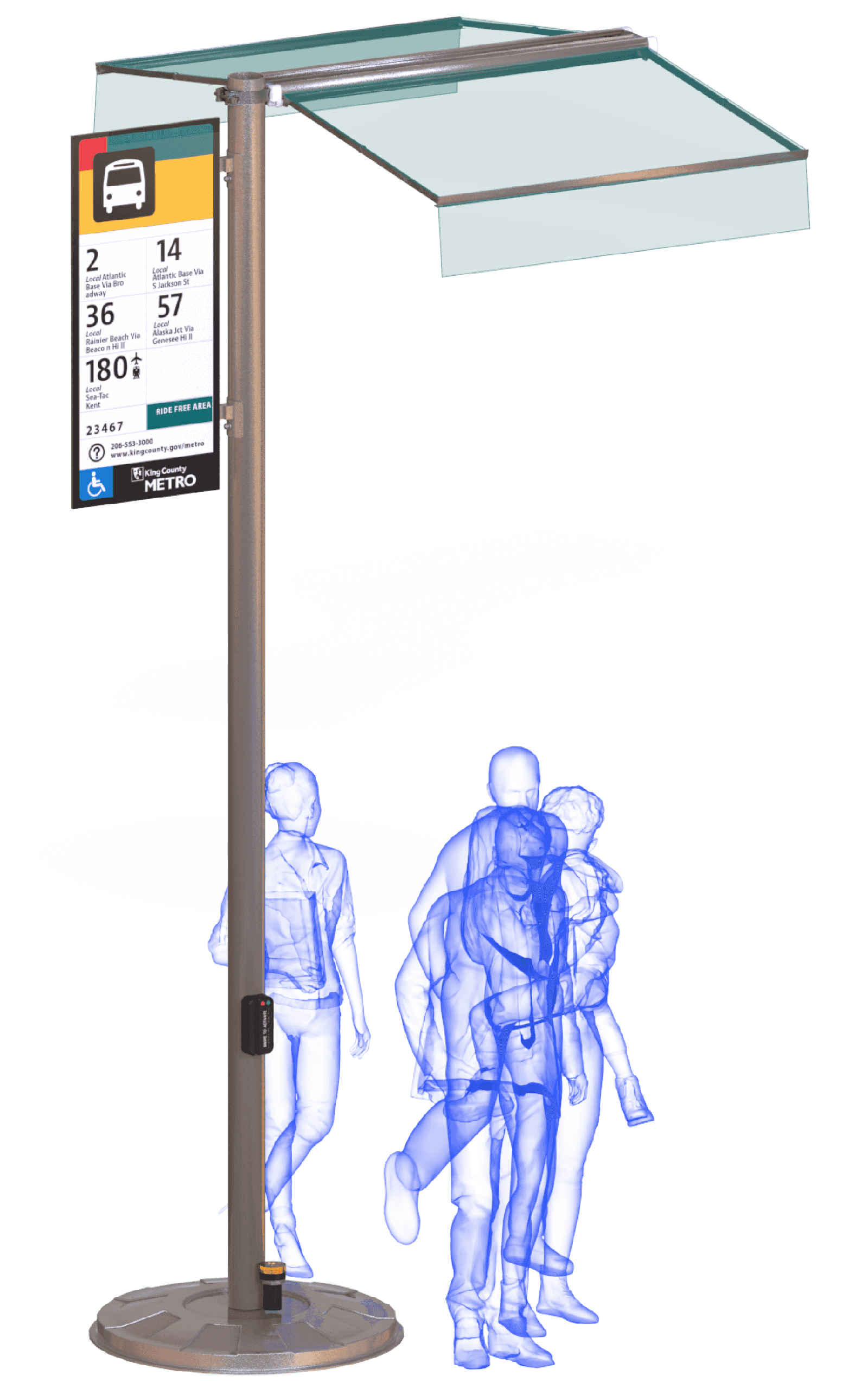
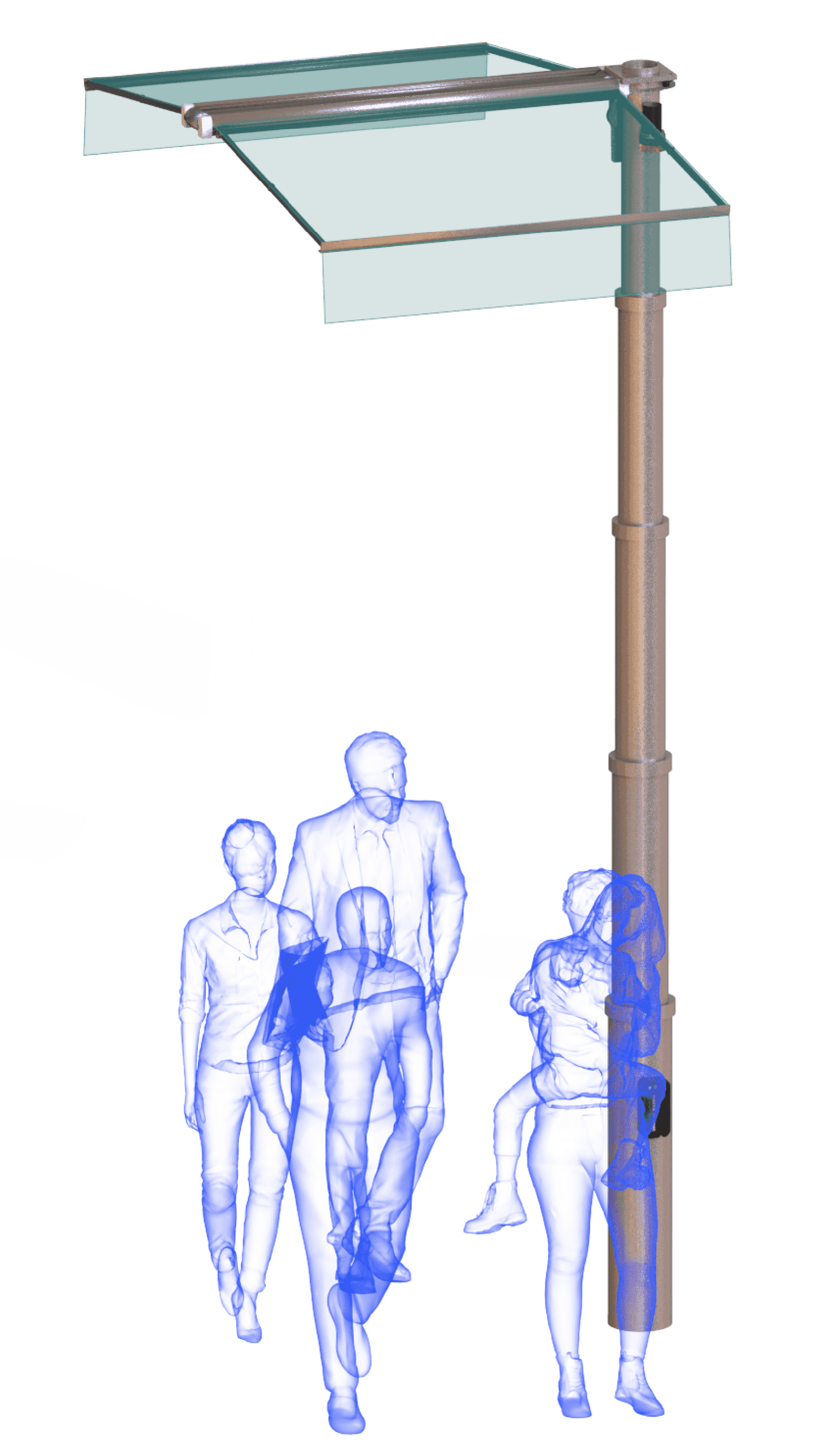
We designed the Drizzle Modular Overhang, a retractable canopy that attaches to existing poles, such as bus stop poles, or to telescopic poles, plus a companion app to request and manage coverage. Mid-fidelity testing surfaced three things we had to solve for: automation, sideways wind, and scalability.
Process
From survey to a working scale model
Discovery and Define
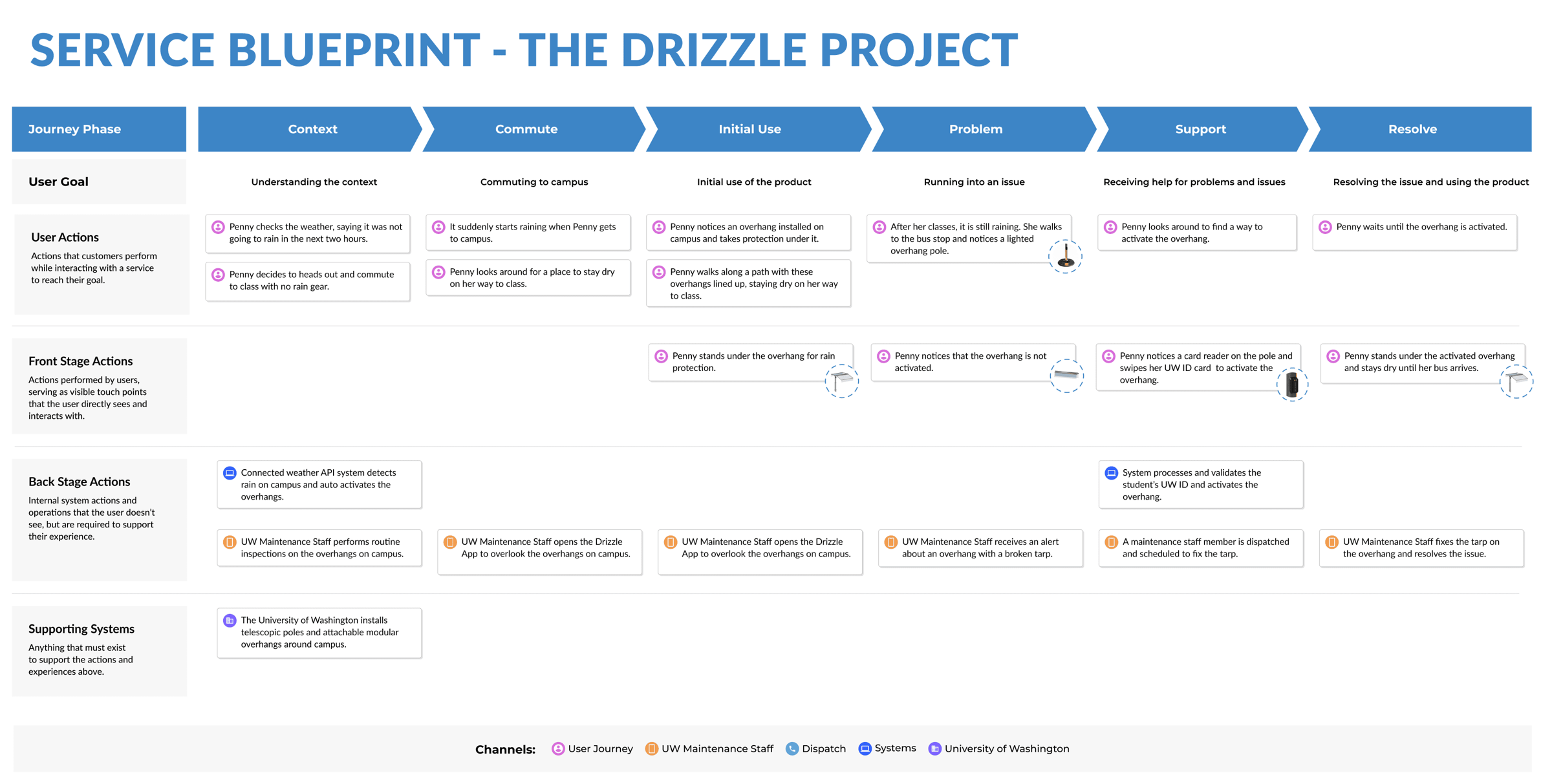
We ran user surveys and interviews. The clearest finding was cost: rain gear is expensive, and a third of respondents had spent less than $25 on it, which pointed to a financial barrier rather than a preference. From the research we built user personas to design against. The personas were Pedestrian Penny, a graduate student in Seattle, and Transit Trevor, a public transport commuter.
Ideate
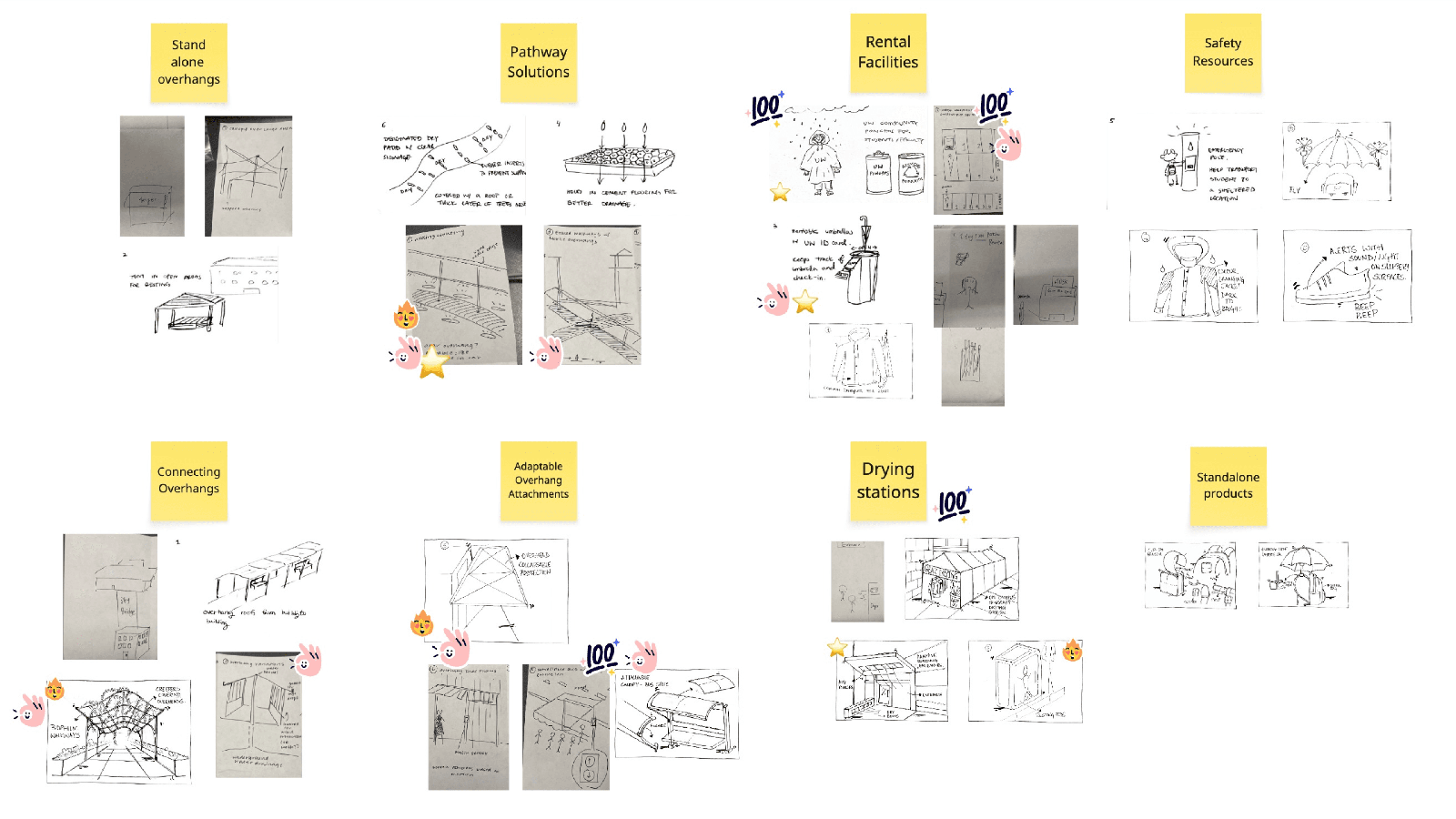
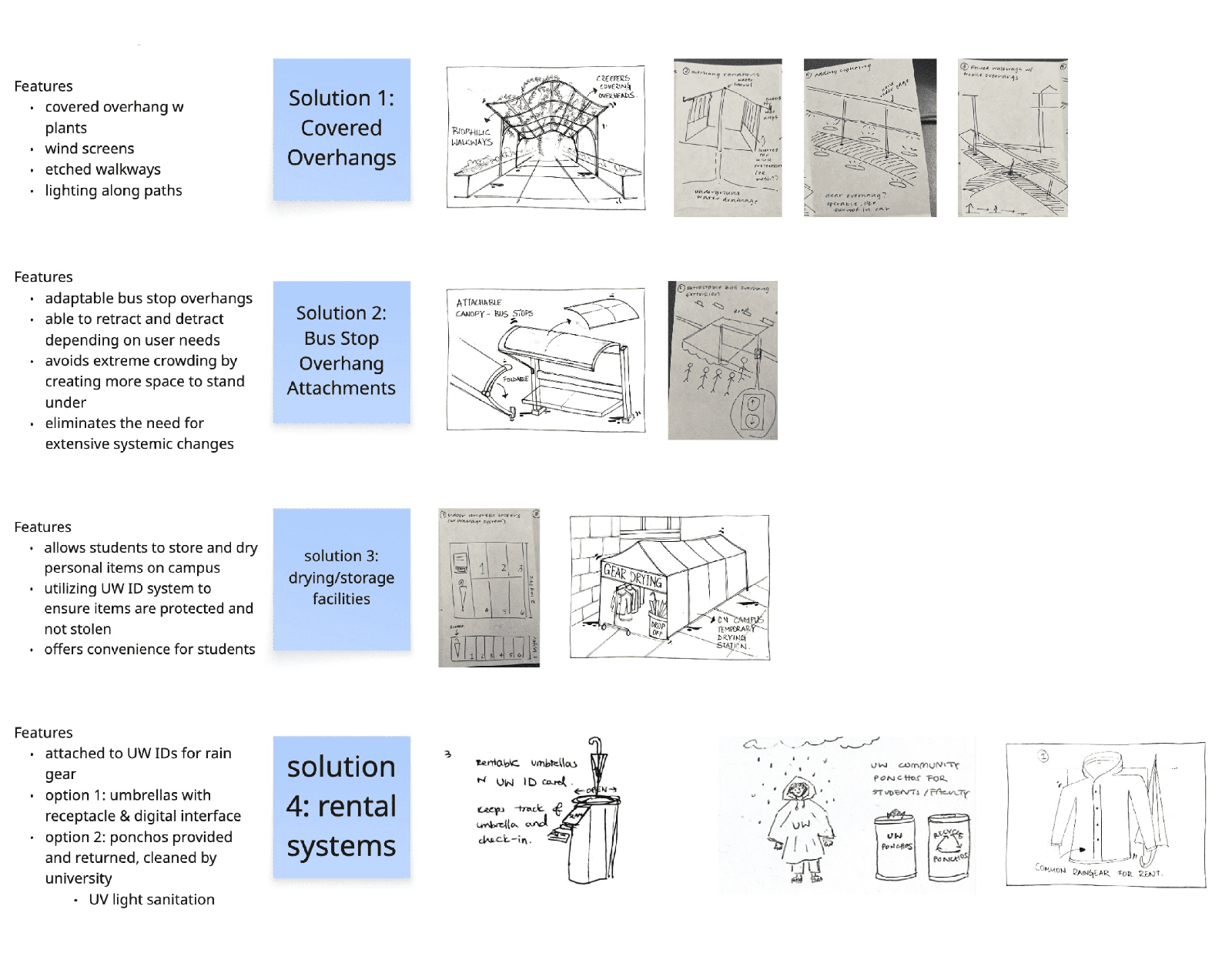
We sketched concepts for shared rain protection that people could use without owning any gear, then narrowed them toward a modular shelter that works with infrastructure already on campus.
Develop
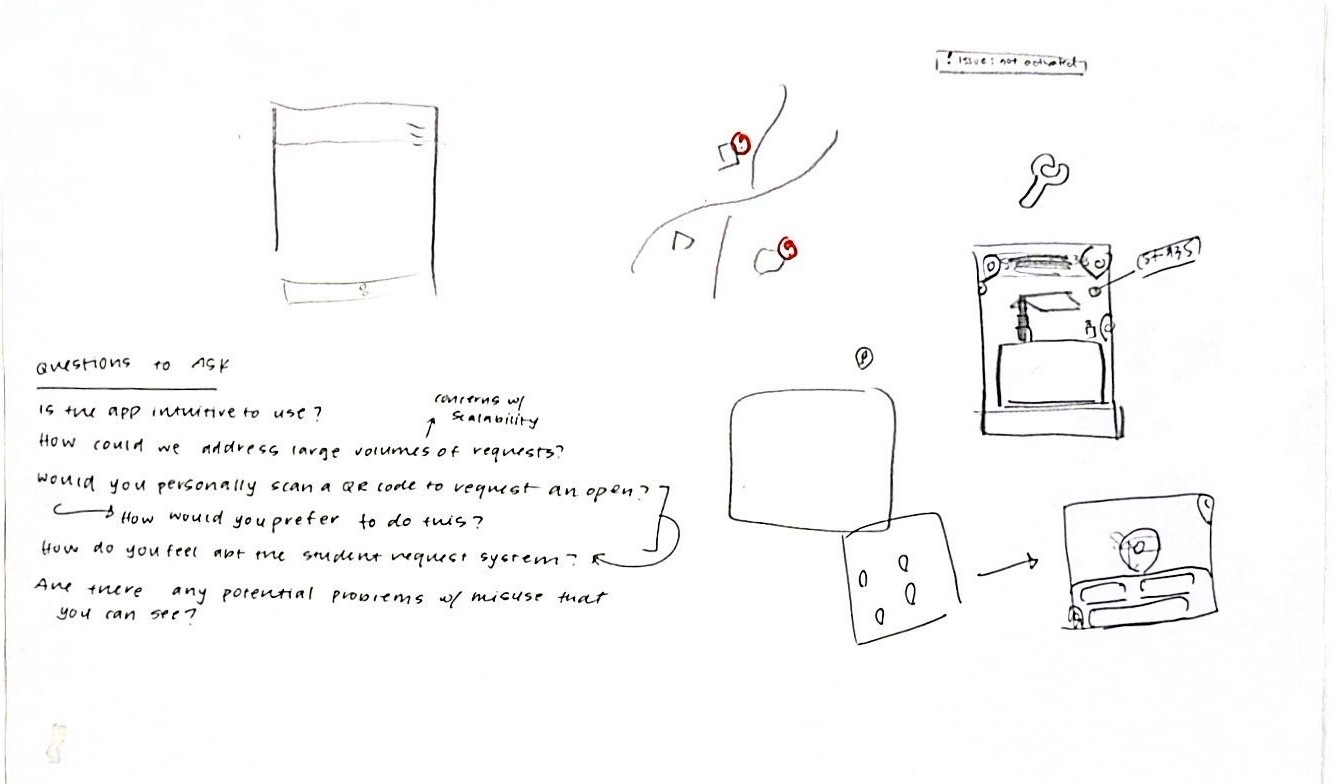
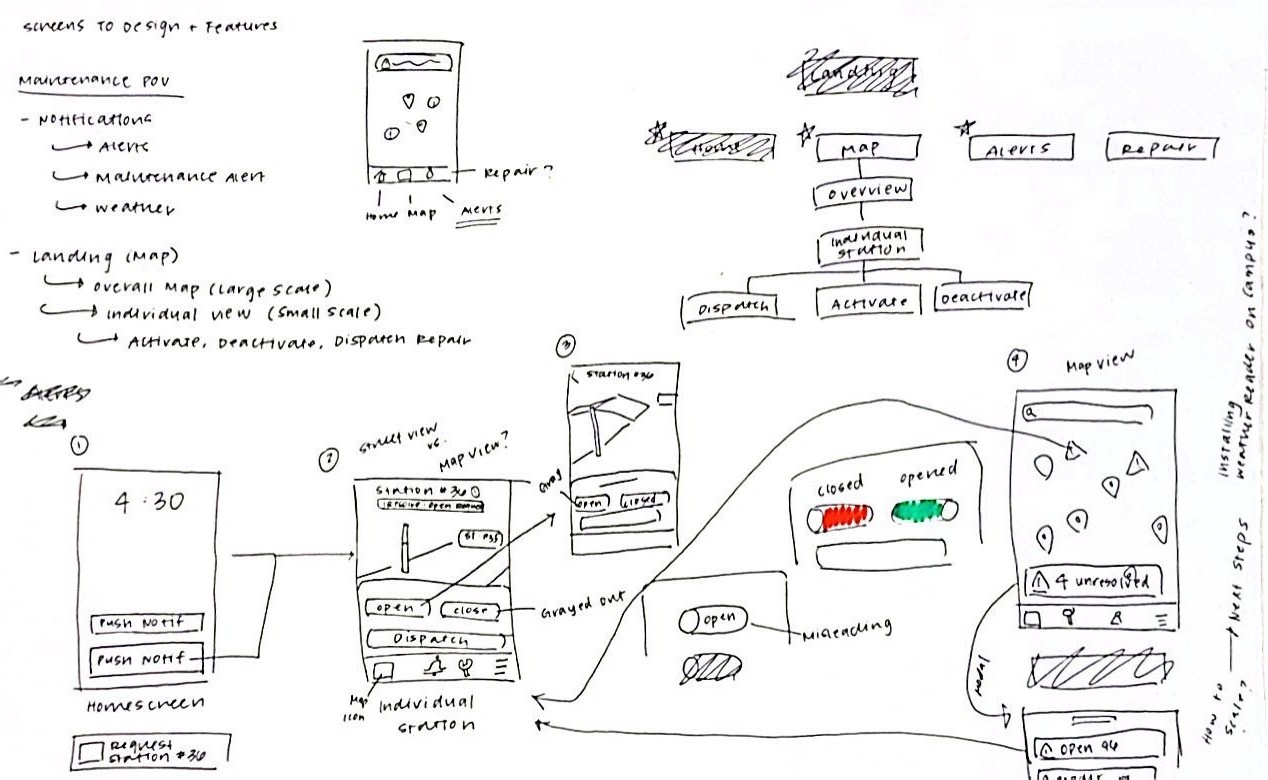
We prototyped at several fidelities: a physical overhang model, wireframes, a mid-fidelity prototype, push notifications, and a Wizard-of-Oz flow to simulate the service responding to requests.

Deliver and Test
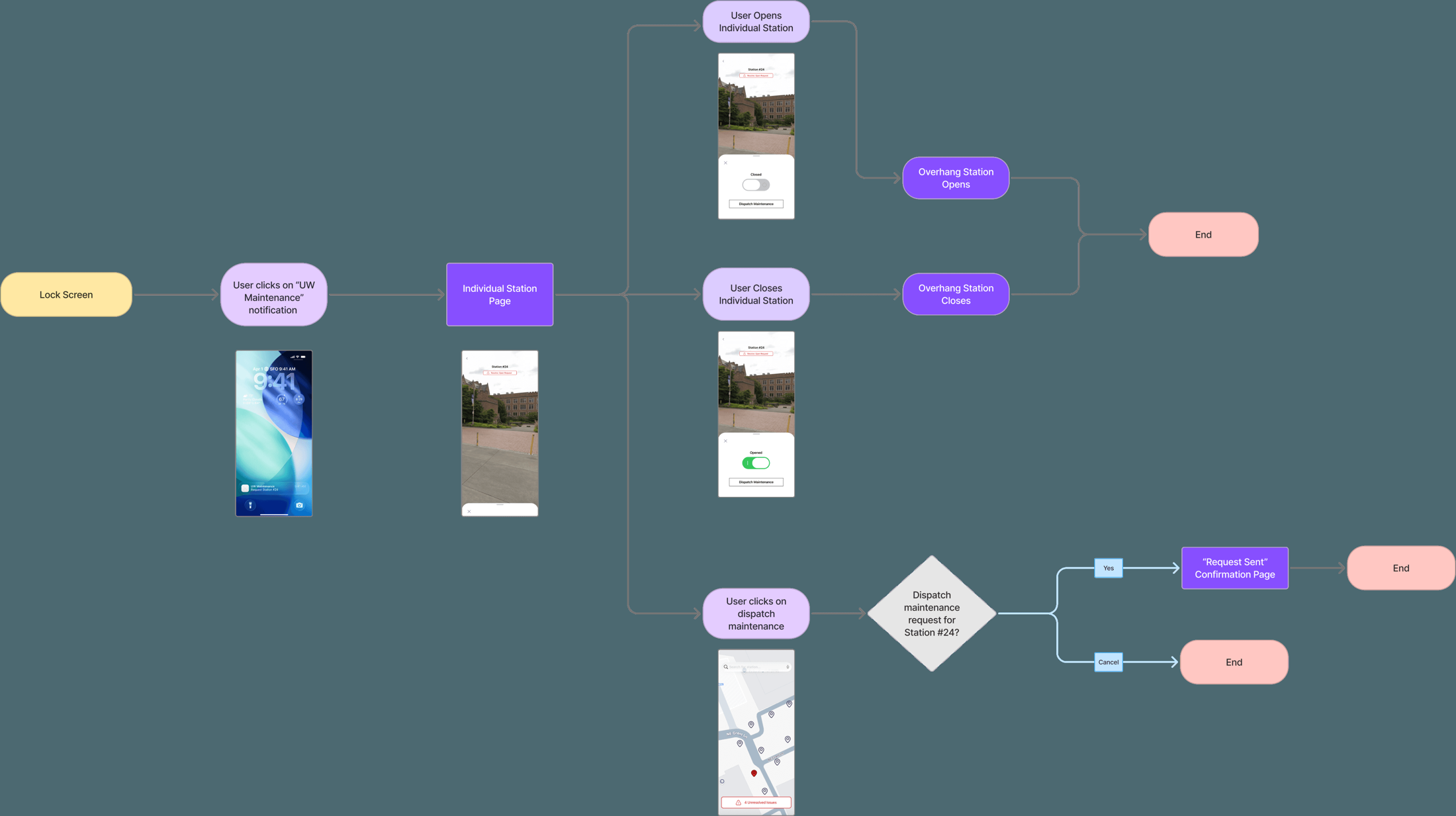
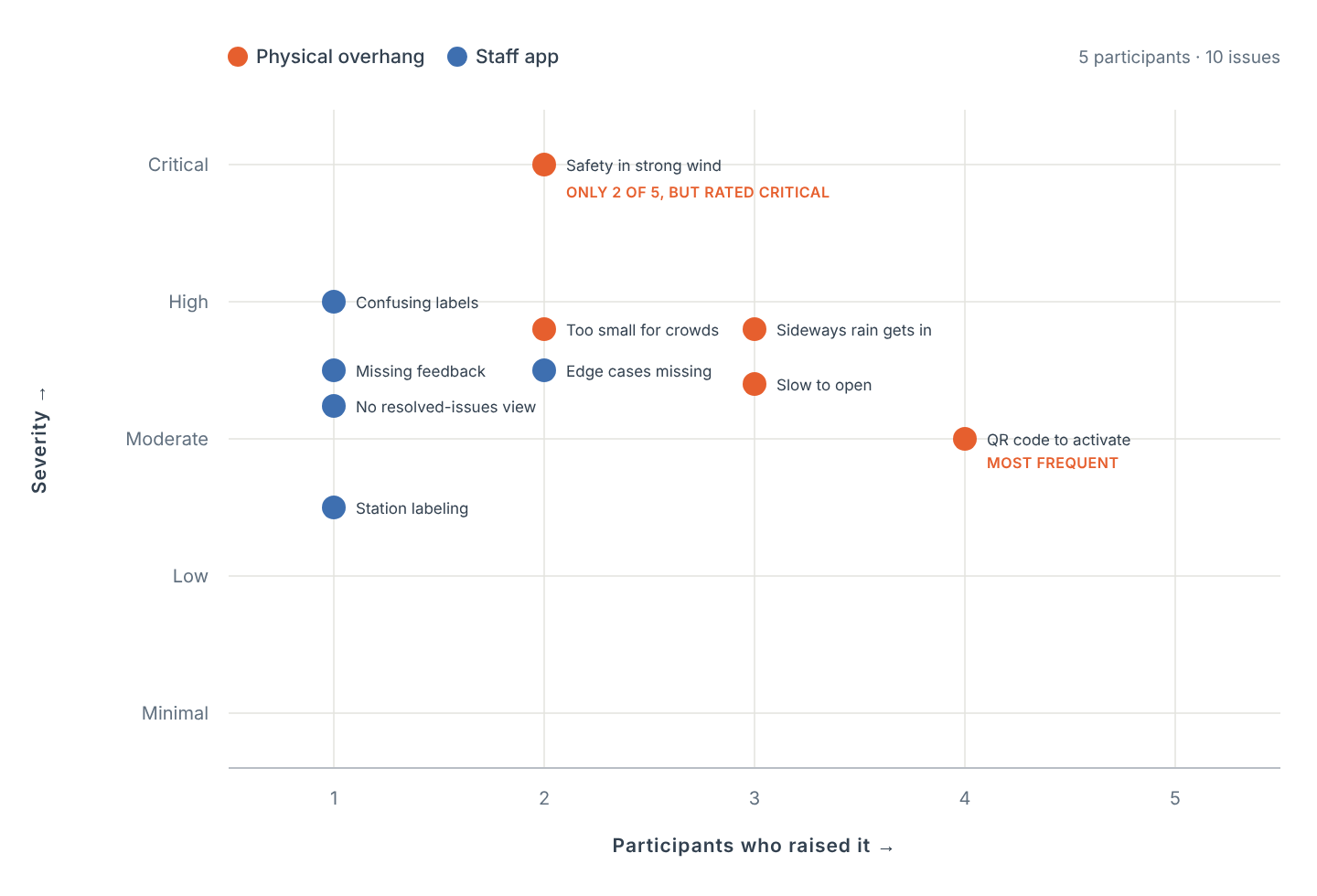
Phase 1 was mid-fidelity usability testing with 5 users in 15 to 20 minute sessions. Three insights drove the next iteration. Automation: QR code activation created significant friction, with 4 out of 5 participants preferring physical buttons or automated deployment, and a one-minute patience threshold before abandoning closed overhangs showed that our staff-mediated approval process would fail in real conditions. Sideways wind: participants raised size capacity and wind resistance, noting the current dimensions would inadequately serve typical bus stop crowds during Seattle's sideways rain. Scalability: as the system scales across campus, the notifications modal would become difficult to navigate under the volume of requests, and users suggested notification filters to account for that volume over time.
The Final Product
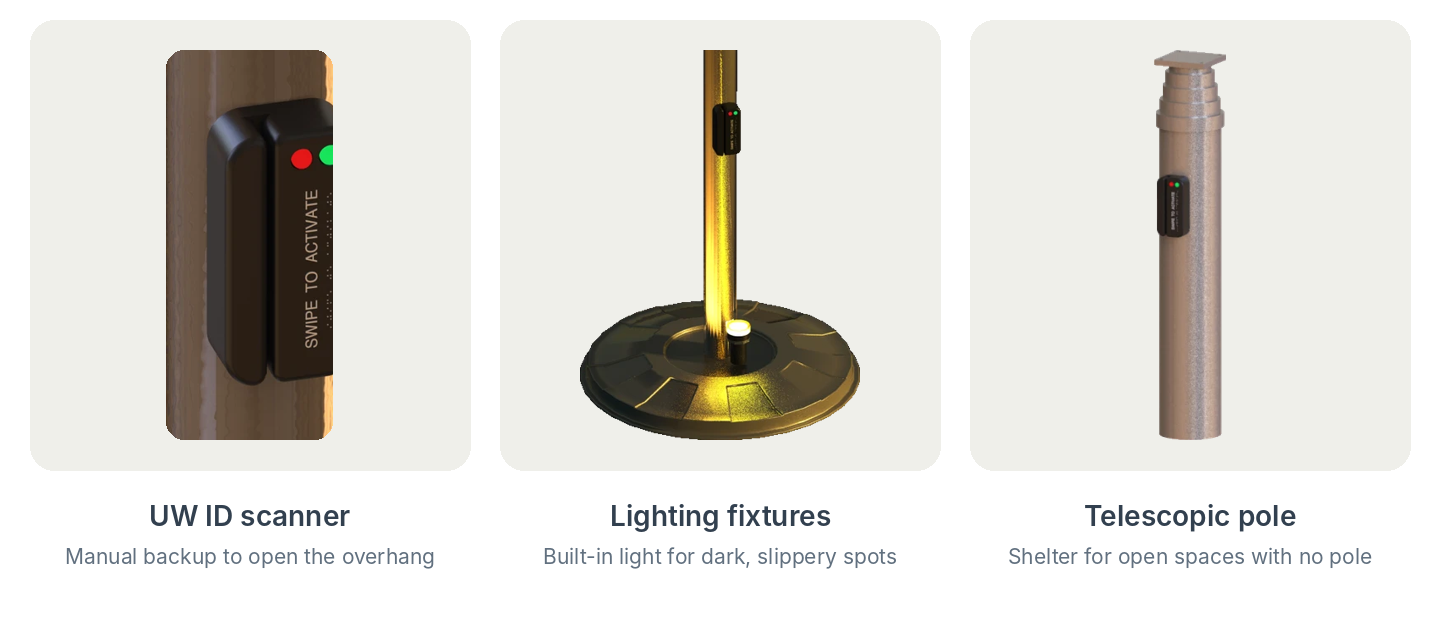
The Drizzle Modular Overhang deploys in two ways: as an attachment on existing poles and on telescopic poles. Its parts are an awning arm that allows retractability, a two-sided clamp for strength, a cover the overhang rolls into, and a detent hinge that opens and closes at 90 degrees. The companion app supports manual on/off, immediate dispatch, scheduled service, and notification filters.
Retrospective
What a 1:15 model could not tell us
Four constraints shaped the project, and three lessons stayed with us.
01
Stakeholder inclusion
Omitting UW facilities staff from early research led to inaccurate workflow assumptions in the maintenance app, teaching us that every stakeholder, especially operational users, must be directly involved to build effective, multi-sided solutions.
Constraint behind itInaccessibility to stakeholders: the maintenance staff app was designed based on assumptions rather than direct workflow observation.
02
Iterative validation
We realized the value of testing specific features (like QR code scan) before full integration and incorporating behavioral scenarios early to ensure richer, more reliable insights throughout testing.
Constraint behind itLimited sample size: 5 users in compressed 15-20 minute sessions across three evaluation domains.
03
Research timing and depth
We learned that the sequencing of research matters as much as its content: front-loading contextual inquiry and behavioral research enables faster iteration, preventing late-stage redesigns.
Constraint behind itTime constraints: validating physical infrastructure within an academic timeline, without full-scale prototyping or weather simulation.
Constraints we worked under
Time constraints
Academic timeline, no full-scale prototyping or weather simulation
Limited sample size
5 users, 15-20 minute sessions, three evaluation domains
Models and stress tests
1:15 scale model: no wind resistance or mechanical stress testing
Stakeholder access
Multi-sided platform tested without direct stakeholder access